
Online IMU declaration (only if there are any changes)
To submit their Tari declaration, businesses and members of the public will need to update the calendar: the 90-day period begins from this date

Key points
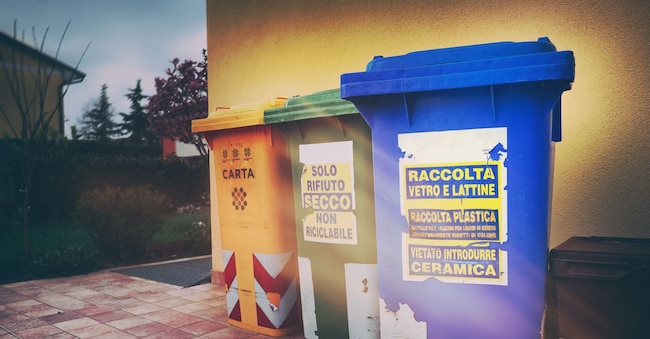
When submitting the Tari declaration, businesses and members of the public will need to update the timetable. Reference must be made to the 90-day period from the date on which the occupation began or was amended or terminated. It is therefore no longer by 30 June of the year following the start of occupancy. Above all, however, the change with the greatest impact is the reorganisation of the tariff discount for businesses that recycle. Legislative Decree 147/2026, implementing the reform on fiscal federalism published in the Official Gazette of 11 August (Ordinary Supplement), comes into force today and contains the reorganisation of the regulations governing the recovery/recycling of municipal waste by businesses. Businesses wishing to benefit from the reduction in the variable component of the waste tax must always submit a notification to the local authority, valid for two years, by 30 June of the preceding year. Subsequently, by 31 January of the year following that in which the recovery/recycling of urban waste commenced, businesses must submit documentation to the local council proving the quantities of waste recovered, in order to calculate the percentage reduction in the variable component.
Tari updates
Previously, two seemingly different sets of regulations were being compared: one contained in the Consolidated Environmental Act (Article 238, Legislative Decree 152/2006), and the other in the regulations governing the Tari (Article 1, paragraph 649, Law 147/2013). The issue, as mentioned, concerns the rules for reducing the variable component of the Tari, where non-domestic users undertake the recovery or recycling of municipal waste. In fact, as correctly noted in the circular issued by the Ministry of Ecological Transition in April 2021, the two provisions should have been interpreted in a coordinated manner from the outset, in the sense that the parties concerned were entitled to a reduction in the variable component proportional to the quantities of waste sent for both recovery and recycling, without the need to demonstrate the recovery of all the waste produced. With the reform, this framework is consolidated through the unification of the regulations, which are now incorporated into the Tari legislation. Finally, it should be noted that the Court of Cassation has repeatedly ruled that any restrictions in local regulations concerning the determination of the reduction are unlawful (Court of Cassation 24326/2026). In essence, if a user sends 100 per cent of their municipal waste for recovery, they are entitled to a full waiver of the variable charge.
IMU updates
As regards IMU, another new provision in the implementing decree on fiscal federalism is the introduction of the online-only declaration in the event of changes to property details, which becomes the sole method for reporting any such changes. Also with regard to IMU, it is stipulated that, in the event of a dispute concerning the cadastral income, the local authority has the power to claim the difference in tax within five years of the conclusion of the proceedings relating to the cadastral income.
In other words, the main change is that the annual tax return will now be submitted exclusively online and is designated as the sole method of reporting the data relevant for the purposes of this tax. The aim is to place a limit on municipal practices which sometimes impose specific reporting obligations in order to benefit from any tax relief measures adopted at local level. Until the new tax return form is published, the forms currently in use remain valid. Furthermore, the obligation to submit an annual tax return applies only to non-commercial organisations, even in the absence of any changes.
Finally, it is anticipated that, in the event of a legal challenge to the cadastral income, just as the taxpayer has time to claim the refund of the IMU overpaid in the meantime, within five years of the final judgement on the cadastral income – and not from the year of payment – so too may the local authority assess the tax difference, plus interest, but without penalties, within the same time limit and, therefore, even beyond the ordinary statutory deadline (31 December of the fifth year following the tax year).

