
Elena Ferrante writer of the century? For the New York Times, yes
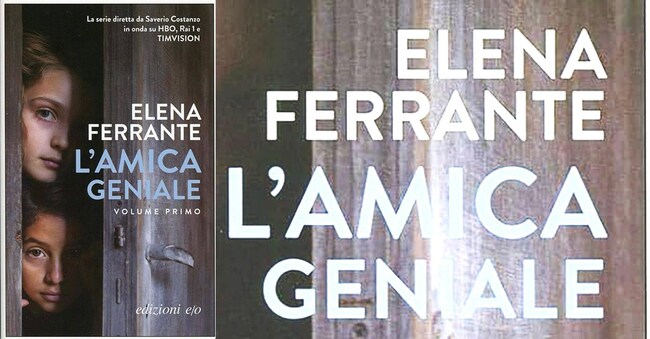
The absolute planetary podium awarded to 'L'amica geniale' by a large jury is pleasing even if not convincing

3' min read
3' min read
The 'New York Times' crowns Elena Ferrante's L amica geniale as the 'novel of the century' no less. The century has only just reached the first quarter and so it is a bit like saying not what a child will do when he grows up but how much he will get in severance pay and pension. Chronological anniversaries are very dear to newspapers: centenaries of birth or death, fiftieth anniversaries and quarter-centuries are occasions to be exploited. Here the joke applies of the director of a theatre in Naples who in 2001 was accused of not having celebrated Verdi's centenary and replied: 'To take a shower I do not need to wait for the anniversary of the water heater'.
Beyond the occasions that are imposed or invented, twenty-five years is a sufficiently settled, as well as roundabout, time to reflect on fiction in the new millennium. Overwhelmed by terrorist, pandemic and war infodemics, television series, and video games, literature continues to have a space, albeit a diminishing one, as a form of entertainment, but has completely lost relevance. One can count on the fingertips of a monk, to stay in Italy, the titles that have left some traces, and for rather (but not only) extraliterary reasons: Gomorrah and the series, Saviano and Scurati. Have we forgotten anything? What other books has everyone talked about, reasoned about and discussed outside the bursting bubble of the literati?
The podium
So what is the significance of the absolute planetary podium awarded to Ferrante by a vast jury of more than '500 novelists, non fiction writers, booksellers, librarians, poets, book reviewers, critics, journalists and other readers polled by Book Review' to choose the 'best book' from a hundred contenders? Just when the national football team is giving unseemly performances at the World Cup and European Championships. The New York Times itself sees the statement as a celebration of autofiction, the fictional account of a more or less common existence. And it is paradoxical that something like this is said about an author whose true identity we do not know: 'Compared to Ferrante, Thomas Pynchon is a visibility fanatic'. This was stated by critic James Wood in How Novels Work, translated and published in Italy by Minimumfax, a compelling essay on creative writing techniques. In a later essay, How Criticism Works, Wood explains: 'Elena Ferrante - or "Elena Ferrante" - is one of the best known and least known contemporary Italian writers. She is the author of several extraordinary novels'. The text on Ferrante is one of the last, chronologically speaking. It starts with Don Quixote, Chekhov, Tolstoy, Virginia Woolf, Joseph Roth, Primo Levi... A nice anticlimax.
"Elena Ferrante", as Wood writes, i.e. in inverted commas, since it is a pseudonym, is not Tolstoy but neither is Sebald, Bolaño, Houellebecq, authors who have held high the tattered flag of literature with an original voice. And besides, the selection did not question the critics and their surroundings, although they were present in the sample surveyed, but a broader public. It is therefore a compromise between popularity and quality, favouring popularity. His books, explains the New York Times, are seen all over the world. They pop out of every handbag and backpack. Pret à porter literature? In any case, it is pleasing that all this is happening to an Italian writer and an independent Italian publishing house. But it now seems like the apocalyptic seal on the end of the novel, of literature, at least as a contemporary possibility and not millenary history. Something mocking.
The Anglo-Saxon publishing world, which has snubbed Italian letters so much in recent years, perhaps from Dante and Boccaccio onwards, bows before a conventional novel, lacking both formal and content originality, which reverberates in the much-exploited terrain of the 'Neapolitan plebe', but without the lyrical inspiration of, say, an Anna Maria Ortese. Capable of being ruthless and of phrases like this: 'Moving is like falling asleep in the snow'. Instead, the tone becomes grotesque and pathetic. The poor, simple family of Lila, the enfant terrible, for example, at one point in the book turns out to have borrowed the most books from the neighbourhood library. But of course no one could read except her and so she read them all by borrowing them on behalf of family members because of the limits on requests. In addition to a quadrilogy, The Brilliant Friend also gave rise to a deterrent strand of imitative books. The friends of the brilliant friends (Mario Portanova's definition).

