Birthday

Elon Musk turns 55: the trillionaire challenging global governance

Wealth was not an end in itself, but rather the lens through which to view an entrepreneurial and financial journey that pushed the boundaries of what is possible.

by Luca Salvioli

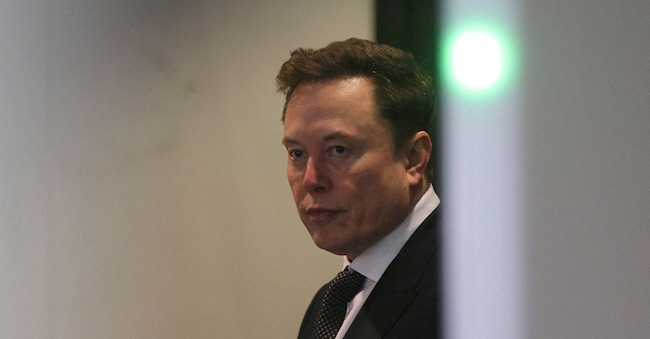
Elon Musk (REUTERS/Manuel Orbegozo)

3' min read

Translated by AI
Versione italiana

3' min read

Translated by AI
Versione italiana

Happy birthday to Elon Musk, who turns 55 today, with a cumulative wealth of $938 billion; he has been the world’s richest man consistently, albeit with various fluctuations in his net worth, since the start of 2024. The peak of 1.32 trillion was reached a few days ago, amid the euphoria surrounding SpaceX’s flotation – needless to say, the biggest IPO in history – before subsequently falling back.

As we reported in Elonomics, the *Sole 24 Ore* book on Musk’s strategic thinking, his first online interview was with CNN in 1999, marking the beginnings of his financial wealth and his remarkable rise as an entrepreneur. He is wearing one of those baggy jackets that were in fashion in the 1990s. He is twenty-eight years old, but has far less hair than he does today. He is eagerly awaiting the arrival of his new car. It is a McLaren F1 – the most exclusive sports car of its time. It has a 600-cavalli engine and costs around 1 million dollars.

Loading...

It is as if that car marked his entry into the ranks of California’s wealthy entrepreneurs. The money to buy it came from the sale of Zip2 for over 300 million dollars. He held a 7 per cent stake and took home 22 million.

Musk was born in South Africa on 28 June 1971, before moving to Canada in 1989 to study at Queen’s University. In 1992, he moved to the United States to complete a degree in Physics and Economics at the University of Pennsylvania. In 1995, he enrolled at Stanford to pursue a PhD, but dropped out after two days to focus on his business venture: Zip2. It was a sort of online city guide that combined street maps with business directories.

For many, the sale of Zip2 would have been a successful exit. Moreover, this was the period just before the dotcom bubble was about to burst, so he could have played it safe. Instead, he invested 12 million to set up x.com. His ambition was to replace virtually the entire range of traditional banking services with current accounts, debit card payments, investments and loans that could be managed online. The website allowed users to transfer money via email.

There is another fast-growing company that offers a person-to-person payment service: it is called Confinity and the service is PayPal.

The two companies were locked in a race to win the last customer. Until they decided it would be better to join forces. That’s when a relationship began that would prove to be very important for Musk: his relationship with Peter Thiel, one of the co-founders of Confinity.

The two companies would effectively merge to form a single entity, to be called PayPal. Musk became CEO, but was ousted a few months later because none of the executives agreed with his methods and strategies. He will, however, remain the company’s largest shareholder. So, when eBay bought it in 2002 for $1.5 billion, Musk will pocket around 180 million.

Thiel says of Musk: ‘There is something about risk that Musk understands and we do not.’ Everything that has happened since then is underpinned by the vast wealth Musk amassed during those years. He decided to channel this into a series of challenges pushing the boundaries of what is possible, alongside public funds (incentives, government contracts). First the SpaceX rockets, then Tesla, the takeover of Twitter, and the founding of xAI – which is now part of SpaceX’s stock market venture: it represents one of the variables with the greatest potential should he truly succeed in taking data centres into space.

There was a moment, in the first half of 2025, when Musk – having been appointed by Trump to lead the effort to cut US government spending – reached the lowest point in his popularity and the peak of his public profile, which had been building up to that point over the previous six years, with divisive and highly political statements, within the American right-wing sphere, against ‘woke’ culture and against Europe. The SpaceX’s share price helped to place him in the role most suited to him: that of an entrepreneur pushing the boundaries of what is possible. The man who epitomises how private powers today govern enabling technologies and strategic national and global infrastructure, raising major questions about the governance of our future.


Copyright reserved ©
Loading...

Brand connect

Loading...

Newsletter

Notizie e approfondimenti sugli avvenimenti politici, economici e finanziari.

Iscriviti