
Elon Musk, Kathaleen McCormick and fair pay in family capitalism
Among the reasons why Elon Musk has featured in the newspapers in recent weeks is the ruling by Kathaleen McCormick, who denied a Tesla stock option granting Elon Musk $100 billion

4' min read
4' min read
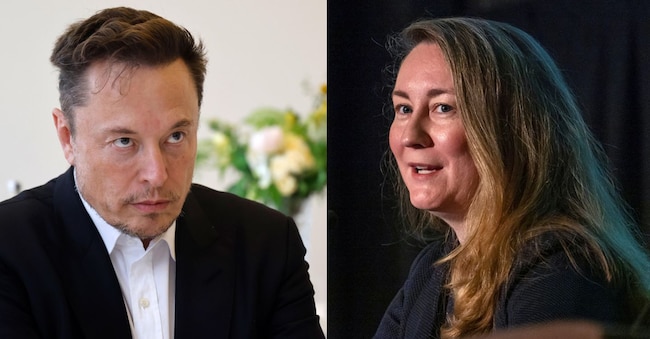
Among the reasons why Elon Musk has been featured in the newspapers in recent weeks is the ruling in which Kathaleen McCormick, Chancellor of the Delaware Court, denied a Tesla stock option guaranteeing Elon Musk $100 billion (it was $50 billion before the election) arguing that the June vote was flawed because the board of directors urging shareholders to re-ratify the compensation package presented materially misleading information. This second ruling follows one in January in which McConmick had argued that the stock option was invalid because the information given to shareholders was unclear, Musk as a significant shareholder had influenced the vote, and the directors had proposed it without being "sufficiently" independent.
familyandtrends thinks that the remuneration of managers in family capitalism is a topic, still, too little researched and there is a tendency to apply practices used for listed companies with diffuse capital, often making mistakes due to application by analogy without reasoning. A first warning should come from Fama and Jensen, the professors who built the theory of stock options: in the same article in which they presented it as a solution to the "agency problem" they stated that this problem does not exist in family businesses. Thus, the methods and practices of managerial compensation applied in family firms are based on a theory that the inventors themselves declared to be unsuitable for these firms.
Delving into the super stock option affair may offer some initial food for thought. This stems from a 2018 award that stated that Musk would only get all the options if Tesla's share price skyrocketed and if sales and profits grew significantly. It was highly unlikely that all of these targets would be met, as Tesla was not doing well. However (and fortunately), Tesla's business took off and its share value soared, allowing Musk to be able to 'cash in' all the stock options.
Hence one of the first corrective measures that owner families should use to avoid these 'overachievement' events: placing a cap on the premium that can be obtained.
The question remains: are these staggering figures fair? Winston Churchill would answer: 'Capitalism is an unjust distribution of wealth. Communism is a fair distribution of misery'. A few years before Churchill, Joseph Schumpeter had contributed to economic theory by explaining that the entrepreneur's profit is different from the capital investor's return and the worker's compensation. In his words: 'This realisation of the new in the economy is not a routine task, in fact by certain peculiar characteristics it is its opposite: it represents a special task and has the special difficulties and risks that are peculiar to any action that does not follow the tracks of experience tested by practice; it requires other qualities of both intellect and will. These are rare qualities... The essence of the entrepreneur consists in fulfilling the function of realising the new; the profit derived from it is the true profit of undertaking'.


