
Emilia-Romagna: manufacturing up 0.6 per cent in the first half of the year
The region is set for GDP growth of 0.9 per cent in 2026. The problem of purchasing power: real wages have fallen by 5 per cent since 2019

Emilia-Romagna continues to generate wealth, but is no longer able to distribute it as it once did. Above all, it is growing at two different speeds: that of the Via Emilia, where large companies, industrial supply chains and 70 per cent of the region’s GDP are concentrated, and that of the plains and the Apennines, which are becoming increasingly distant from the region’s economic heartland.
This is the picture – at once reassuring and worrying – painted by Guido Caselli, deputy director of Unioncamere Emilia-Romagna, in the study “Postcards from the Future. Emilia-Romagna: between what is no longer and what is not yet’. The figures paint a picture of an economy that is holding its own, but is struggling to regain momentum.
Manufacturing on the rise
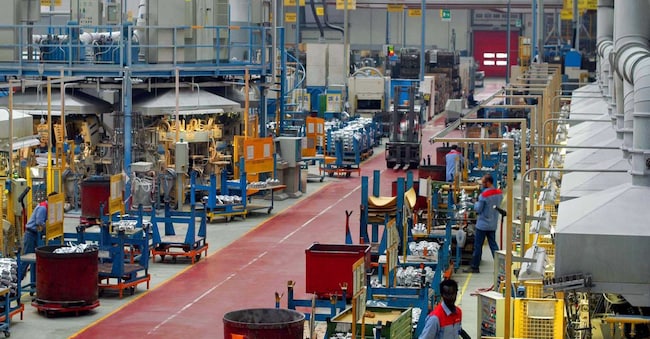
Regional GDP is set to grow by 0.9 per cent in 2026, in line with the Italia average, whilst a slowdown to 0.7 per cent is forecast for 2027. The main driver of the economy is manufacturing, which, after several difficult years, has returned to slight growth (+0.6% in the first half of the year), supported by exports (+3%). The picture is quite different for other sectors: construction and trade both recorded a fall of 0.4% in the first six months of the year, whilst the craft sector fell by 1.5%. This disparity confirms that, whilst industrial strength remains crucial, it is not sufficient to drive the entire regional economy.
Purchasing power
Then there is the issue of purchasing power. Since 2019, real wages per employee in the region have fallen by 5 per cent, whilst profits per employee have risen by 12 per cent. This gap is widening further due to inflation, which reached 4 per cent in Emilia-Romagna in September according to the latest Istat figures, with price rises of 16.6 per cent for electricity, gas and fuel. The risk is that economic growth will cease to translate into improved living standards. It is here that Caselli highlights the ‘two guiding principles’ of Emilia-Romagna’s development: ‘The first is the ability of local areas to transform a multitude of businesses into a system’, through leading companies and supply chains deeply rooted in the local area. ‘The second is the ability to transform economic growth into widespread well-being and social cohesion.’ Two links that have underpinned the success of the regional model for decades, but which today must be re-established on new foundations.
The Via Emilia takes centre stage
The most obvious divide is geographical. The Via Emilia accounts for just 30 per cent of the region’s area, yet is home to 64 per cent of the population and generates 70 per cent of GDP. Over the last ten years, the population has grown by 4.5 per cent, compared with a decline of 0.9 per cent in the plains and 1.2 per cent in the Apennines. The economic divide is even more pronounced: between 2021 and 2025, GDP in the central corridor rose by 6.7 per cent, compared with just 0.2 per cent in the plains and 0.7 per cent in the mountains.

