
Emilia-Romagna, for Tper pre-Cvid results and 260 million investment plan
The Board of Directors approves the draft budget for the public transport company: 228 million euros in revenues and 3.3 million in profits

2' min read
2' min read
Tper, Emilia-Romagna's leading local public transport company, closed its 2023 financial year with operating revenues of 228 million euro and a profit of 3.3 million. A group of 2,346 employees (98% on permanent contracts) and 12 mobility and logistics companies that directly manages the road service and car sharing in the Bologna and Ferrara basins, as well as regional rail transport, in partnership with Trenitalia, and is a shareholder of both Seta (the local public transport company of Modena, Reggio Emilia and Piacenza) and Start Romagna, which operates in the Romagna area.
Results, those put down in black and white in the draft financial statements approved by the Board of Directors, which are now being examined by the shareholders' meeting and confirm a return to pre-Covid normality, after complex years for public transport. In fact, 2023 saw a 20% increase in passengers on Tper's 1,200 vehicles travelling by road (exceeding 150 million travellers) and a 30% increase in monthly subscriptions, thanks to the Transport Bonus.
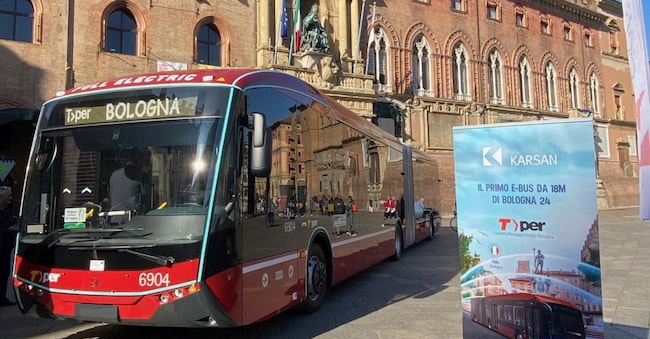
"The 2023 budget is the basis for tackling the challenges for the coming years and the critical issues in the sector. The company is committed, as always, to doing its best and growing as an integrated and intermodal mobility group," commented the president and CEO of Tper, Giuseppina Gualtieri. Recalling the economic-financial solidity of the company and the managerial prudence that has made it possible to double investments (from 32 million euro in 2022 to 69 million euro) already last year. With an ambitious programme for the three-year period 2024-2026 of a further 260 million euros of investment for public transport activities in the Bologna and Ferrara basins alone, including infrastructure and the purchase of 362 new buses, under the banner of ecological transition and technological development. Already last year, Tper had put 81 new ecological and accessible vehicles into operation.
Together with the preliminary results, the group's integrated balance sheet was also presented, based on ESG (Environmental, Social, Governance) principles and the SDGs of Agenda 2030. On the environmental front, Tper is leading the way with initiatives such as TPH2, a consortium company created with the Austrian group Wolftank for the construction of hydrogen refuelling infrastructures: a new 15.5 million euro development step has just been announced and will bring to 4 the number of active plants between Bologna and Ferrara to fuel the vehicle fleet, with the goal of reaching 12% of the hydrogen fleet, with the commissioning of more than 130 hydrogen buses by 2026. On the labour front, on the other hand, it is a phase of great tension due to the shortage of personnel: Tper has just relaunched the #guidoio communication campaign, to look for new bus drivers to be trained (the company is also responsible for driving licences) and hired. From the beginning of 2023 to date, 222 drivers have joined the Tper group, against 177 terminations.


