
‘Emilia-Romagna: there is an urgent need to cut red tape and reduce processing times to boost growth’

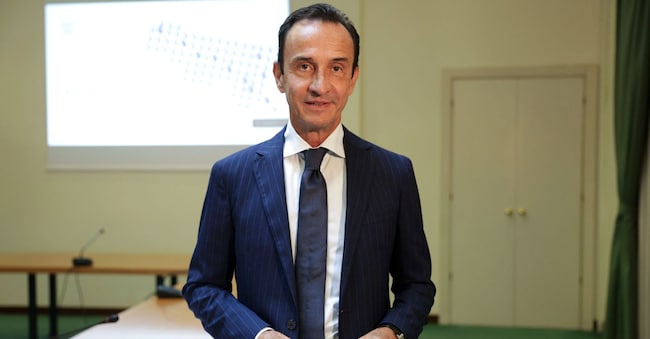
Businesses in Emilia-Romagna are not stopping their investment, but in 2026 they are taking their foot off the accelerator. Following the 690 million invested in 2025, this year’s plans stand at 611 million – an 11 per cent decrease. This is not a retreat, but rather a measured slowdown: companies are not giving up on innovation, but are being more selective, postponing some projects and assessing risk more carefully. This is the key message of the annual survey by Confindustria Emilia-Romagna, based on 329 companies with a combined turnover of 17.7 billion. There are also two other key points: last year, investment accounted for an average of 4.9 per cent of turnover (slightly below the 5.3 per cent recorded in 2024); in 2026, 86 per cent of companies will still be investing. “Against this backdrop, companies in Emilia-Romagna are continuing to invest to strengthen their competitiveness,” emphasised Riccardo Fava in his first public appearance as regional president of the industrialists’ association; he will be joined by Enrico Aureli and Nicola Parenti as vice-presidents, who were introduced yesterday.
Turning back to the figures, the decline in investment figures in the 2026 plan reflects very different situations. Small businesses are increasing their investment by 6 per cent, almost compelled by their very nature not to halt modernisation. Medium-sized firms are seeing a decline, whilst large firms are cutting spending by 18 per cent. However, this figure should be interpreted with caution: large groups do not carry out exceptional transactions every year, and their investment cycles are more sporadic. Signals from the most exposed sectors are also a factor. The Sassuolo ceramics sector has already made it clear that every extra euro allocated to the ETS risks translating into one euro less for development. The main factors holding back decisions are geopolitical uncertainty – cited by 35.6 per cent of firms – bureaucracy and demand that is difficult to predict. For medium-sized firms, the burden of regulatory compliance is now the main obstacle; for large firms, however, the most serious challenge is finding suitable skills. ‘Human capital is becoming increasingly strategic,’ observes the regional president of Confindustria, because ‘the ability to attract, train and retain talent will be one of the key competitive factors in the coming years’.
The priorities, however, remain clear. Businesses continue to focus primarily on machinery (72 per cent of the sample), software (64 per cent) and training (63 per cent), whilst digitalisation, research and skills are gaining in importance. This is a sign that industrial investment no longer centres solely on factory buildings or production lines, but on an increasingly close interplay between physical capital, technology and people. It is here that the lag among smaller firms becomes apparent, as they are still under-represented in research, sustainability and digital innovation projects. ‘This vulnerability risks widening the productivity gap within the regional system,’ warns Fava. Simplification therefore becomes a key factor. Confindustria is proposing a ‘bureaucratic shock’ to the Regional Government, involving a 30 per cent reduction in authorisation times for procedures.
It is an ambitious, almost provocative proposal, and ‘it would be a significant achievement in boosting investment’, insists the president. However, his assessment of the Region is not entirely critical. ‘We recognise the value of the progress made with the Pact for Jobs and the Climate and the go-ahead for the Bologna Bypass’, but there is still a long way to go: from the Cispadana motorway, considered crucial for the industrial development of part of the region, to infrastructure and energy. ‘Because now is not the time to slow down.’

