
Emilia-based Bper (with Sondrio) conquers Lombardy: the leading bank in terms of branches
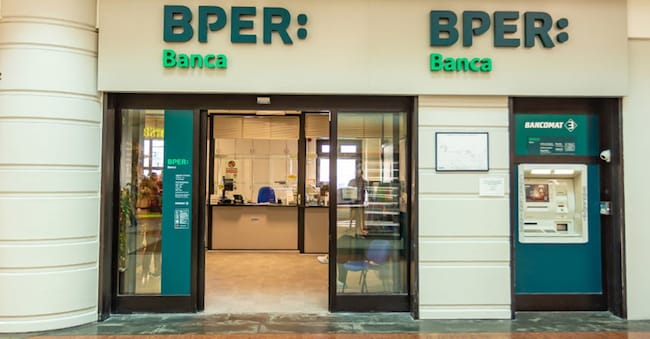
According to the latest report by the Fiba Foundation (First Cisl) on banking desertification, the first impact is on physical presence: Bper will have 673 branches (17.9% of the total), ahead of Banco Bpm (523, 13.9%), Intesa Sanpaolo and Iccrea, both at 501, or 13.4%

3' min read
3' min read
Given that there is a continuous retreat of the physical presence of banks in the Italian territories - in the first six months of the year they closed 261 branches, a drop of 1.3% compared to the end of 2024 -, the advancement of the risiko will change something in the branch signs that we are used to seeing in cities and towns, especially in wealthy Lombardy. The latest update of the Observatory on banking desertification of the Fiba Foundation of First Cisl, which processes data made available on 30 June 2025 by the Bank of Italy and Istat, shows that Bper, considering also the network of branches of Banca Popolare di Sondrio, becomes the first reality in Lombardy with 673 branches, equal to 17.9% of the total. And it finishes ahead of Banco Bpm, which has 523, or 13.9%, and Intesa Sanpaolo and Iccrea, which both have 501, or 13.4%. Added together, this means that in Lombardy, around 58% of branches are now in the hands of just four groups: a figure, the latter, that should not change much, unless a blanket closure of branches begins. The Antitrust regulations addressed to Bper would in fact have required the sale of only six branches.
The first effects of risk
."The risiko is changing the balance of power between banking groups in the territories," says Riccardo Colombani, secretary general of First Cisl. "A bank with popular origins like Bper, historically rooted in Emilia Romagna, is, adding the network of Popolare Sondrio, the first reality in Lombardy in terms of territorial presence, that is, of branches, holding almost 18% of the total. It is of fundamental importance that Bper does not forget its history and that it knows how to enhance the business culture of Popolare di Sondrio, not going beyond the few sales required by the Antitrust and continuing to guarantee its roots in regions such as Sardinia and Calabria, where the group's presence has always been significant'. It is precisely the dimensional progression of Bper itself, Colombani continues, 'that demonstrates that it is possible to combine the interests of work with those of shareholders, families and businesses, even in more economically disadvantaged territorial areas'.
The national top five counters
.If, on the other hand, we look at the national figure, then the leading group in terms of territorial presence is confirmed as Intesa Sanpaolo. The further drop of 141 branches in the first half of the year, compared to the end of 2024, has meant that the gap with Iccrea, which closed six branches in the same period, has narrowed further, to 28 branches. In the national top five banks by number of branches, the Bper group also entered the top five, which, with the takeover of Popolare di Sondrio, climbed to fourth place. Cassa Centrale Banca is in fifth place, the only group to have opened nine branches in the period in question.
Advancing desertification
.Also on a national level, in the first six months of 2025 another 34 municipalities remained without branches in their territory. The total number thus rose to 3,415, or 43.2 per cent of the total. According to First Cisl's analysis, the number of people who do not have access to banking services or are at risk of losing them also continues to increase: compared to 31 December 2024, there are more than 11.2 million. Of these, more than 4.7 million (+ 1.8%) live in totally deserted municipalities; almost 6.5
million (+ 3%) in municipalities undergoing desertification, those with only one branch. The number of companies based in desertified municipalities is also growing: 6,116 more than in the previous quarter. For the CISL bankers, in order to understand the real extent of the phenomenon, the data should be read in parallel with those on the diffusion of internet banking, which is still modest: in Italy, only 55% of users use it, against an EU average of 67.2%. This shows that banking desertification represents an accelerator of social exclusion, especially for the elderly segments of the population, penalised by their lower level of digital skills (between 65 and 74 years of age only 33.9% use internet banking against an EU average of 44.7%).

