
UAE: Local collecting boosts the art market
Accounts from gallery owners in Dubai and Abu Dhabi suggest that demand remains steady, but the geopolitical crisis is exacerbating costs and highlighting the fragility of the international art ecosystem

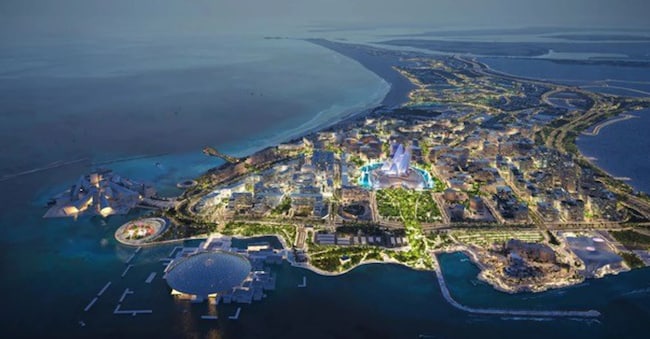
To understand how the geopolitical crisis is affecting the art market in the Emirates, Arteconomy has gathered testimonies from a number of gallery owners based in Dubai and Abu Dhabi. Their responses paint a nuanced picture: local collecting is showing resilience in terms of demand, with sales figures in some cases exceeding last year’s levels, whilst the international sector is feeling the brunt of difficulties linked to travel restrictions, rising costs in general and, in particular, logistics. The crisis does not appear to have caused a structural contraction in the market, but it has accelerated certain changes already underway: a greater focus on local and regional collectors, more selective purchases, the rescheduling of activities and greater attention to the emotional and identity-related dimensions of the works.
Gallery owners put to the test
Gallery owners’ assessments vary, but they agree on one point: sustained demand alone is not enough to guarantee the future stability of the region’s art ecosystem.
Maliha Tabari, founder of the eponymous gallery in Dubai, has observed greater caution in purchasing decisions and a decline in footfall at galleries and events, which led to an initial slowdown in sales before they regained momentum later in the year. The business has been sustained primarily by local and regional collecting, which has become the gallery’s main focus this year. Tabari explains that she has rethought the programme, with fewer exhibitions, longer exhibition periods and a greater focus on young artists and affordable works. A case in point is ‘Same Air’, a group exhibition organised by Tabari Art Space featuring works priced at a maximum of 10,000 dollars, which tapped into collectors’ interest in works capable of conveying the shared experience of the crisis. Looking ahead to the next two years, the gallery owner is focusing on consolidating the regional cultural infrastructure and on the growing collaboration between institutions, galleries and collectors, which is also boosting the international visibility of artists from the Gulf. Risks remain, however, including greater selectivity in purchases, rising costs and buyer fatigue.
A more continuity-oriented stance is taken by Kwame Mintah, co-founder of Efie Gallery – whose programme is dedicated to artists of African origin and from the diaspora – who urges us to distinguish between the market’s immediate reactions and structural changes. The gallery has maintained its focus on the continuity of its activities and on long-term relationships with artists, collectors and institutions, whilst recognising the need for greater flexibility in managing travel, transport and schedules. Mintah observes that acquisitions are often the result of relationships built up over months or years, and that collectors with a long-standing interest in an artist’s work tend to maintain a long-term perspective even during periods of uncertainty. Looking ahead, he sees an opportunity in strengthening regional collecting and, above all, in cultural dialogue between Africa and the Middle East – two regions linked by deep historical ties but still under-represented in international artistic narratives. Commercial growth, she warns, must be accompanied by investment in research, knowledge and the involvement of institutions.
The power of local collecting
There has been no slowdown in sales Kourosh Nouri, founder of CARBON 12 in Dubai. On the contrary, some collectors have doubled their support for the gallery through their purchases. The crisis has helped to distinguish those collectors who are genuinely committed and willing to support galleries even in difficult times. The most serious problem concerns logistics, with transport costs having become particularly onerous. “Art continues to move, but today it comes at a high price,” observes Nouri, who sees market maturity and institutional strengthening as the main opportunities for the coming years. His main concern is the financial sustainability of galleries, which are under pressure from rising operating costs and an increasingly packed exhibition calendar.
Maryam Al Falasi, founder of Iris Projects in Abu Dhabi, also describes a growing demand: the gallery’s sales this year have exceeded those of 2025, and in two recent solo exhibitions, 85 per cent and 95 per cent respectively of the works on display were sold. Alongside international collectors, he highlights the growing role of buyers based in the Emirates and, in particular, young Emiratis who are beginning to collect works by artists of their own generation. The main challenges relate to shipping costs, which are both more expensive and less predictable. The crisis has also affected the artistic programme: the solo exhibition by Juma Al Haj has changed direction, becoming an exhibition of works created since the start of the conflict. For Al Falasi, the outlook remains positive, thanks to the growth of collecting and institutional investment, starting with the future Guggenheim Abu Dhabi. But the proliferation of cultural events, he warns, does not automatically guarantee a more robust market: the real challenge is to enable galleries to grow and artists to build lasting careers.

