
Emissions, the path to net-zero by 2050 and the role of businesses
Industry – including energy production and manufacturing – is one of the sectors most responsible for emissions. It is also one of those that has reduced CO₂ emissions the most in recent years

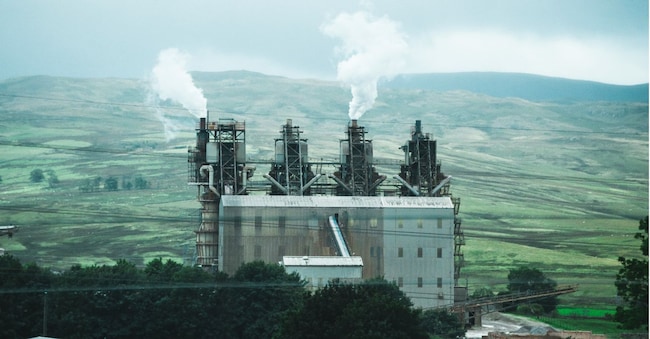
Cement works, steelworks, paper mills, glassworks, steel, chemical and energy companies: these are the ‘hard-to-abate’ industries, where reducing CO₂ emissions is more difficult due to the large quantities of fuel used and production processes which, by their very nature, generate carbon dioxide as a by-product. They are among the biggest contributors to emissions, although their performance has improved over the years. And there is still a long way to go to achieve the carbon neutrality – or net-zero – target by 2050 set by the EU, which requires all greenhouse gases produced to be offset.
The role of industry
According to the latest ISPRA data for 2023, the sectors that produce the most climate-changing gases are transport (28 per cent of the national total), energy production (21 per cent), the residential sector (18 per cent), the manufacturing sector (13 per cent), agriculture (8 per cent) and industrial processes (6 per cent). ISPRA notes that in 2023, national emissions fell by 26 per cent compared with 1990 levels. This trend is due to increased energy efficiency from renewable sources in industrial sectors and the shift towards the use of lower-carbon fuels. Greenhouse gas emissions have also fallen by 6.8% compared with the previous year (2022), totalling 385 million tonnes of CO₂ equivalent.
Emissions targets
More specifically, the decline is mainly attributable to the reduction in emissions from the energy sector, which in 2023 cut emissions by 47.3 per cent compared with 1990, despite an increase in production, as well as to the manufacturing sector (-45.2 per cent) and industrial processes (-40.5 per cent). By contrast, emissions from the transport sector have risen, with over 90 per cent of these stemming from road transport: they are more than 7 per cent higher than in 1990. This has resulted in an insufficient reduction in emissions: within the framework of the national targets set by the European Effort Sharing Regulation, which requires Italia to achieve a 43.7 per cent reduction by 2030 compared with 2005 in emissions from transport, residential sources (building heating), agriculture, waste and non-ETS industry, the failure to reduce transport emissions has led to Italian emission levels gradually approaching the permitted maximum limits, until they were exceeded in 2021 (by 5.5 million tonnes of CO₂ equivalent), in 2022 (by 5.4) and in 2023 (by 8.2), as certified by ISPRA, and for which penalties may be imposed in the coming years.
The Ets system
The companies subject to the EU Emissions Trading System (ETS), the European scheme for trading green certificates to offset emissions, are precisely those where emissions are difficult to reduce. The latest report available, compiled by the GSE and covering the first quarter of 2025, indicated that total auction proceeds for allowances in Italia amounted to €655.6 million (up 22 per cent on 2024), from which one can infer the financial commitment of these companies. This should, however, finance the transition: the proceeds from the East auctions support Decree-Law No. 19 of 28 February 2025, which allocates €600 million for 2025 to finance the Energy Transition Fund for the industrial sector, increasing its budget compared with what was previously established. Or Decree-Law No. 208 of 31 December 2024, which allocates, for the period 2025–2027, €45 million per year to finance the activities of the GSE as guarantor of last resort in PPAs (power purchase agreements).
Technologies
As regards technology, in addition to electrification – with the development of renewables and the associated storage and grid systems – trials involving hydrogen – which continue to be hampered by high production costs – and progress in the field of CO₂ capture, with Eni and Snam working to finalise Italia’s first infrastructure of this kind in Ravenna, and feasibility studies having been launched by cement works and waste-to-energy plants, there is considerable momentum in the field of biomethane. The process, which involves the anaerobic fermentation of animal manure, agricultural waste and the organic fraction of household waste produces the gas we use for heating, ready for injection into the grid, is attracting investment and projects, driven by incentives under the National Recovery and Resilience Plan (PNRR), which have just received the green light from the European Council for an increase in the initially allocated funding.


