
Emotional health as a compass for organisational and social well-being
Gallup research highlights a global increase in unhappiness, but also the value of positive emotions in building resilience and emotional well-being

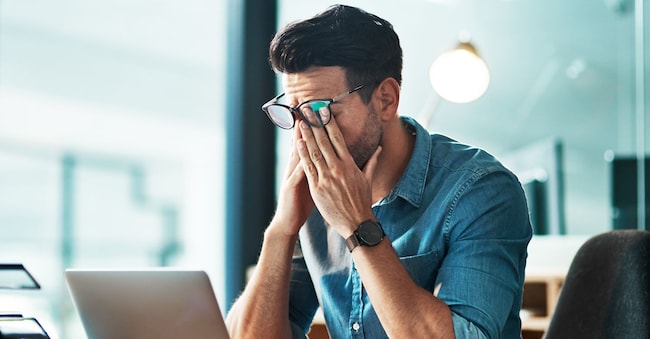
Gallup's research 'State of the World's Emotional Health 2025', based on more than 145,000 interviews in 144 countries worldwide, leaves little room for interpretation. Forty per cent of adults worldwide reported being in a state of worry for much of the day and more than a third said they felt constantly stressed. Compared to ten years ago, hundreds of millions more people feel these emotions today. Inviting you to read the report online, we could summarise and simplify it by saying that we are more unhappy and anxious. The global increase in unhappiness over the past decade has been well documented, but we can argue that leaders and decision-makers in more or less every sphere and at every level have overlooked it. The tendency and temptation, in fact, to rely, almost exclusively, on economic 'well-being' indicators have had the consequence of almost completely ignoring their own and people's emotional health, in general. This prospective preference represents, to this day, a crucial inattention because difficult emotions (I prefer this definition instead of negative, because we know how much the latter declension represents an oversimplification, bordering on the dangerous) do not only reflect anguish and agitation, but also restrict people's vision and ability to focus and undermine their ability to cope with difficulties. When these feelings become chronic, they make individuals and societies more vulnerable to instability. However, not everyone experiences these emotions in the same way; gender and age differences reveal who bears the heaviest burdens and where the pressures on well-being are greatest.
Globally, women report feeling more sadness, emotional burden, worry and even physical discomfort. Young adults experience more anger, while adults over 50 cope better with this type of stress. Older adults, on the other hand, cope better with sadness, which often becomes resignation. At this point, we might ask whether there are signs of facilitating and favourable emotions somewhere. Yes, and the data is very interesting. In the same research, Gallup asked adults around the world (according to the numbers seen above) if they had experienced any positive emotions/feelings, and 88% said they appreciated being treated with respect and care, a figure up three points since 2023 and among the highest levels ever recorded by Gallup; while 52% said they had learned or done something interesting in the previous period, a percentage also on the rise. It seems, then, that although the global condition makes us shake and tremble inside, positive experiences prove more resilient than uncomfortable ones. It turns out, in fact, that so-called positive emotions broaden awareness and help people build lasting resources, such as coping strategies, trusting relationships and resilience, which further fuel positive experiences. These deeper foundations make positive experiences harder to abandon, even in crisis situations, while uncomfortable emotions make us react more abruptly to instability.
In the last few days, I have had the opportunity to consult the 2023-2024 survey on 'adolescents and emotional life' between Generation Z and Generation Alpha, edited by V. Iori, E. Marta, A.M, Ellena, S. Martinez-Damia, professors and experts at the Università Cattolica del Sacro Cuore. The results of this observatory, tell us of young people who experience 'an unease and emotional malaise characterised by anger, fear, insecurity, shame, a sense of failure and ambivalent relationships in social participation, the perception of school mattering and a sense of societal antimattering'.
We are faced with two generations that must equip themselves for the social changes taking place in our time, through knowledge and the introduction of effective models and examples to be followed with confidence. At the risk of bringing up boys and girls who can only passively and reluctantly adapt to a status quo in which adults appear distant and constantly engaged on other fronts, first and foremost, to survive themselves.
Here again, in this research, a key turning point and redemption emerges that parallels what we saw earlier in the Gallup report. Where, in fact, there is empowerment 'of and in relationships', in a framework of respect and positive development, fears and uncertainties give way to experimentation, courage and positivity. Teenage empowerment is not far removed from what we develop in soft skills programmes in companies. We are talking about the same skills of managing oneself, one's motivation, personal self-efficacy and realising one's purpose. This intergenerational assonance leads me to say that, nowadays, those who have the opportunity to participate within their organisation in courses of awareness of their own relational style, transversal skills and emotional intelligence have the opportunity not only to find new tools and keys to meaning for their own personal and professional development, but can also be a model for their sons and daughters, friends, neighbours and so on. It is no coincidence, in fact, that the inter-company redemption figures of learning activities (I refer to the number of participants in workshops, webinars, e-learning sessions) related to topics linked to sustainability, wellbeing, psycho-social and mental health are considerably higher than those related to hard vertical skills. This trend is making explicit an ever-increasing need for timely, up-to-date and quality in-depth knowledge, provided by accredited professionals and capable of transferring complex but important content for all of us in a simple but non-trivial way. As people, as professionals and as citizens of the world.

