Prison and rehabilitation

Prisoners’ work: structured training and collaboration with businesses at the heart of the reform

The Council of State has suspended its opinion on the draft text: the privacy issue remains to be resolved

IMAGOECONOMICA

6' min read

Translated by AI
Versione italiana

6' min read

Translated by AI
Versione italiana

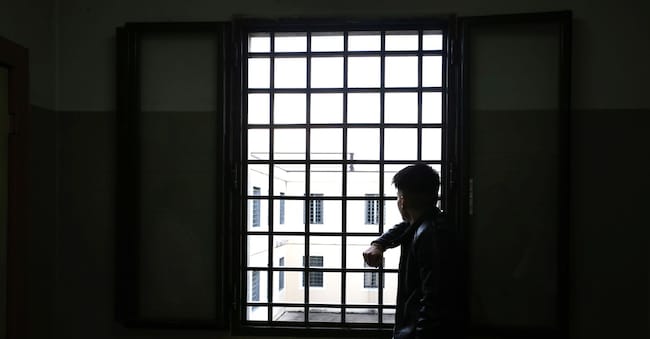
Facilitating access for prisoners to the world of work, building on synergies with businesses and the local community. To bring them ever further ‘out’ of prison, increase employment opportunities (including in the private sector), and simplify their reintegration. These are the objectives of the draft Presidential Decree approved – at a preliminary stage – by the Council of Ministers on 4 June, which aims to amend the current prison regulations (Presidential Decree 230/2000) with a series of changes relating to the organisation and vocational training of prisoners.

The text, on which the Council of State has temporarily suspended its opinion pending the requested amendments, is in line with the direction set out at by the latest Security Decree (Decree-Law 48/2025, converted into Law 80/2025) - to gradually open prisons up to the labour market – and aims to guarantee prisoners the opportunity to access training and vocational pathways that look outwards, ensuring equal pay and contractual terms.

Loading...

Looking at the figures, in fact, according to data from the Prison Service, as at 31 December 2025, out of over 63,000 prisoners, only 34 per cent (over 21,000) are involved in work activities and, of these, the majority (more than 18,000) are employed by the Prison Service. Furthermore, a large proportion of those in employment (70 per cent) are mainly involved in managing internal services such as maintenance, cleaning and kitchen work. These tasks, whilst designed to meet the needs of the prisons, do not provide skills that can be put to use once the sentence has been served. Skills which, on the other hand, working for an external employer could help them acquire

The objectives of the Presidential Decree scheme

There are five areas it addresses: the regulation of vocational training courses; active promotion of employment opportunities; the signing of agreements with public and private bodies to facilitate the integration of prisoners and internees into the labour market; the reformulation of the now anachronistic ‘obligation to work’; and the expansion of permitted individual activities. Let’s try to understand what this is all about, clause by clause.

What do the articles

provide for?

Article 1 of the draft Presidential Decree (which amends Article 42 of Presidential Decree 230/2000), focusing on vocational training courses, specifies that participation in these courses must, on the one hand, comply with the annual training programme drawn up by the relevant regional office of the Prison Service; on the other hand, to the agreements entered into – not only with the Region and designated local authorities – but also with other public or private bodies accredited by the relevant Region or Autonomous Province and authorised to provide training in accordance with regulatory requirements.

Article 2, on the other hand, operates on two fronts. The first, in paragraph 1, provides for the inclusion – within the text of Presidential Decree 230/2000 – of a new Article 46-bis which assigns a series of functions to the Prison Service: to define operational procedures to increase employment opportunities, to enhance the professional skills of prisoners and internees, and to identify models for agreements to be signed with job centres, so as to provide those in prison (who meet the requirements) with the services and active labour market measures provided for by law. Furthermore, the Department is also responsible for identifying the most effective ways of placing the profiles available in individual institutions on the labour market and for adopting provisions – to be applied in the relevant prison facilities – that promote full employment of the jobs available outside.

The second aspect, on the other hand, amends Article 47 of the current Presidential Decree: concerning the organisation and management of prison work schemes (as well as in-house services such as cleaning, building maintenance and meal provision), not only prison management and public and private companies but also bodies accredited by Regions and Provinces to provide training – provided they use ‘the methodologies of the dual system and the training enterprise’ – as well as institutions institutions of higher education in the arts, music and dance and ETS.

In Article 3, the focus shifts to agreements between the Prison Service and public and private bodies, as well as social cooperatives, interested in offering genuine employment opportunities. Article 47-bis sets out the content of the agreements in detail: the text must specify the characteristics and terms of use of the areas, premises, machinery and equipment that may be made available on a loan-for-use basis; criteria for verifying compliance with the obligations imposed on the entity providing the employment; the duration of the assignment (a differentiated maximum duration is provided for, of eight and four years respectively, depending on whether the agreement concerns an agricultural-pastoral activity or one of a different nature); the procedure for the reimbursement of any indirect costs incurred by the Department; the application of the Public Contracts Code (Legislative Decree 36/2023) if the prison work involves the provision of internal services and the party with whom the agreement is concluded is not a third-sector organisation. Once the four- or eight-year periods have expired, the agreements cease to be valid.

Article 4 is more than ever focused on the objective of establishing a system in step with the times and, in line with the repeal of the relevant provision, amends Article 50 of the Presidential Decree currently in force by removing any reference to the obligation to work ‘for convicted prisoners and those subject to security measures in agricultural colonies and workhouses’ (originally provided for by Law 354/1975 on the prison system and rendered obsolete by the amendments introduced by Legislative Decree 124/2018). How? It replaces it with a decidedly more appropriate formulation: the text now refers to ‘employment opportunities or vocational training’.

Finally, the latest article broadens the scope with another key element: it amends Article 51 of the current Presidential Decree, allowing prisoners to carry out craft, intellectual and artistic activities (to which are also added production activities for personal consumption, not currently included) as an alternative to standard work, and therefore no longer merely as a supplement to it or outside the hours set aside for it.

Loading...

What the Council of State reported

As previously mentioned, at the end of July the Ministry of Justice sought an opinion on the draft from the Council of State. The Council, having analysed the draft line by line, identified a number of operational and drafting issues and decided to reserve its judgement pending the submission of a revised and amended version incorporating the comments provided.

The first issue he highlighted was the protection of privacy, calling on Via Arenula to seek an opinion from the Data Protection Authority. The activities set out in the draft Presidential Decree, in fact, involve the processing of personal data of prisoners and internees who will be involved in work and training activities; information which will evidently then also be passed on to third parties responsible for organising and managing the various programmes.

Not only that: the new text, in fact, also mentions the development of a ‘Platform for skills-based employment and social and labour market inclusion’, currently in the works, which will require the collection of sensitive data in order to ‘analyse how the work reintegration measures adopted by individual prison authorities are implemented and assess the ability of work reintegration policies to bring about the expected changes in the employment rate of prisoners after they have served their sentences, their income from work and the recidivism rate’.

From a strictly textual perspective, in addition to clarifying more precisely the alignment with the Ministry of Labour, the Council has requested, for example, that it be made explicit which organisations are accredited to provide training and with which institutions may sign agreements and memoranda of understanding, as well as the requirements they must meet in order to be authorised (first and foremost, the adoption of ad hoc working methods).

That is not all: the administrative judges have also requested a further examination of the lines of action set out in the measure and a clear distinction between ‘services’ and ‘prison-based work’ to avoid any overlap between tasks and the products produced and, above all, to ascertain whether entities other than prison management (such as companies, ETS organisations and institutions specialising in artistic activities) are in fact responsible solely for the management and organisation of the work, whilst the services remain the sole responsibility of the Prison Service.

Copyright reserved ©

Brand connect

Loading...

Newsletter

Notizie e approfondimenti sugli avvenimenti politici, economici e finanziari.

Iscriviti