

Debito globale a 353 trilioni: perché i mercati «ballano» sull’abisso
di Maximilian Cellino

3' min read
3' min read
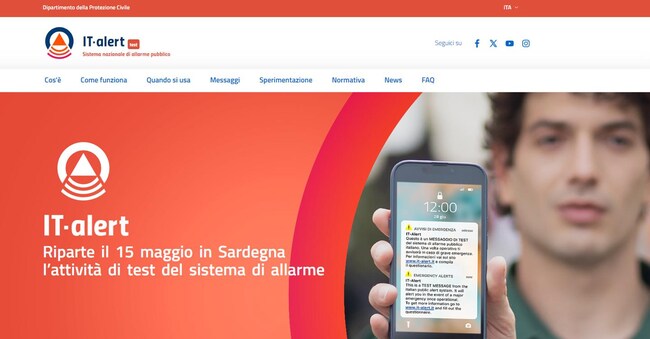
The hypothesised scenario is that of a tidal wave caused by an earthquake. This is the hypothesis of the exercise scheduled Wednesday 15 May in the central-eastern coast of Sardinia as part of the exercises planned by the public-alert-system, the tool for direct information to the population that broadcasts to mobile phones in a given geographical area messages useful in case of imminent or ongoing serious emergencies or disasters. The IT-Alert message, once transmitted, is received by anyone who is in the area affected by the emergency and has a mobile phone switched on and hooked up to the telephone cells.
The appointment is at 11 a.m. and will affect areas in the province of Nuoro, in the municipalities of Orosei, Siniscola, and Posada. The hypothesis is that of a tidal wave, i.e. 'a series of sea waves produced by the rapid displacement of a large mass of water originating from a strong earthquake with epicentre at sea or near the coast'.
On the telephones of the inhabitants of the areas affected by the drill, the message 'Test Test Message IT-Alert. A SIMULATION of an earthquake-generated tsunami is being carried out in the area where you are. To find out what message you will receive in case of real danger and to fill in the questionnaire go to www.it-alert.gov.it Test Test'.
Not only that, for today from the homepage of the dedicated site it will be possible to access a page where it will be possible to see the text of the message that would arrive in the event of real danger and the link www.it-alert.gov.it to the questionnaire that citizens in the areas involved are invited to fill in, even if they do not receive any notification. The test message will arrive on the switched-on and connected mobile phones of those in the target areas.
For the Italian coasts, according to the estimated severity of the seaquake, the system provides two levels of alert, orange and red. The coastal zones to be evacuated in case of an orange or red alert are defined in the inundation maps drawn up by Ispra, in which the orange alert level is associated with warning zone 1 while the red alert level is associated with warning zone 2.

