Energy

'Enaon, Italgas model and maxi investments to grow in Greece'

Interview with Barbara Morgante, CEO of the Greek subsidiary, who also announces for the Greek country digital native networks ready for renewable gas

by Laura Bonadies

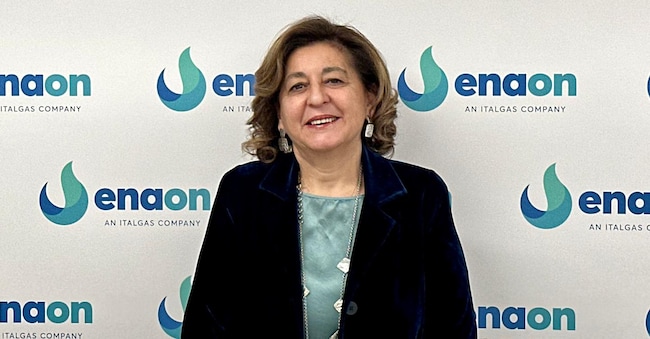
Barbara Morgante, amministratore delegato di Enaon

5' min read

5' min read

(Il Sole 24 Ore Radiocor) - A little over a year after the integration with Italgas, Enaon aims to grow more and more in Greece. In its pipeline, the Hellenic company aims to reach 180 million in investments in 2024. A growth that the CEO, Barbara Morgante, in an interview with Radiocor calls 'quantum'. The plans include expansion into several Greek cities in order to serve a further 13 towns by the end of the year - in addition to the 107 already achieved - for a total of 38,000 new customers, in addition to the more than 600,000 already served by the company. In an area poorly served by large transport infrastructures, Enaon is ready to borrow the model used by Italgas to bring natural gas to Sardinia, which is not served by methane pipelines. 'We have already identified some targets and the details will be announced with the business plan that the Group will illustrate in June,' explained Morgante. The CEO, who has been in Athens for two years, has been called upon to lead Enaon with the task of developing the gas distribution network, also in view of the phase-out that the country is planning to abandon coal and lignite, with which it produces part of its energy needs

How did 2023 go?

Loading...

It was the first full year after the acquisition of Italgas. It was a very challenging year in terms of both business and governance since there were previously three separate operators. The important operation was to unify them and standardise their procedures. We decided to apply the same approach used by Italgas in Greece. This includes the choice of a single headquarters and the use of workspaces that allow integration and, above all, encourage knowledge transfer.

What are the investment plans?

So far we have accounted for more than EUR 100 million, up 78% from the last year before the acquisition. By 2024 we expect to do much more, we plan to reach 180 million euros. This is a quantum leap. 2024 is a challenging year, but we will definitely reach the targets set. On the user level, we have already registered a high number of new customers in these first months. This indicates to us that we are seeing a market that responds well. In fact, we do not see any particular downturn despite some European and national indications that push towards other energy sources. Expansion will also concern geographical areas: the aim is to connect other regions of Greece. To date we are present in the large basins, Athens, Thessaloniki and Thessaly, where penetration is not far from what it is in Italy; the rest of Greece is practically zero. So that is where we are concentrating. Our action is twofold: to build new networks where they do not exist and to increase the customer base where we are already present. In 2024, we expect to reach 13 more cities for a total of about 40,000 new customers, which is a big increase from last year's 27,000.

Are you thinking of concrete actions in the Greek capital?

In Athens we will replace almost 50 km of cast iron pipes with polyethylene. We already replaced a few kilometres last year. We estimate that in three years at most we will carry out the complete replacement; it is a very complex operation taking into account the difficulties of working in the city centre and the fact that we are dealing with non-continuous kilometres of pipes. For the current year, we aim to replace more than 20 kilometres of pipes.

 What are the plans for the dissemination of biomethane?

Biomethane is a topic dear to Italgas and important for the country, which has a strong agricultural vocation. On the occasion of the rebranding, Enaon signed an MoU with the association of biogas producers. We are committed to finding common solutions to convert the production of current plants from biogas to biomethane and to identify new opportunities for biomethane production. The issue is not only technical and financial, but also legislative. In Greece, a legislative framework on biomethane and hydrogen has not yet been defined, which, according to the Ministry of Energy, should see the light of day by June. For our part, we are fully prepared to work with the ministry and the experts to make the groundwork for the measure as effective as possible, building on the know-how of the Group, which already has biomethane in its network. Once the regulatory framework is clarified, we will be able to assess the economic impacts and from there start with the implementation. We will definitely enter this segment and also look for sources of funding, including public funding, to support the projects.

Are you considering M&A operations?

We monitor the market as always. To date we have not detected anything interesting. There are no dossiers on the desk

In your opinion, could the logistics model for LNG that Italgas has implemented in Sardinia also be replicated in Greece? If so, have you already identified any islands?

I would not only look at the islands but at all areas of the country that are far from the transport infrastructure. We have already started working in this direction and are currently planning the implementation of this technology in some regions. Thanks to the experience gained in Sardinia, we will be able to easily extend the service to areas not served by physical pipelines. As far as the islands are concerned, we are making a series of evaluations also because it will be necessary to develop more complex logistics. More details will be available when we present the Group's new strategic plan in June. We prefer LNG (Liquefied Natural Gas) to Cng (Compressed Natural Gas) installations, which are already present on the mainland and are more advantageous for the end customer, who is always at the centre of our strategies.

Are you planning investments to enable networks to also carry hydrogen blending?

The technologies developed in-house by the Group, such as the latest-generation smart meter Nimbus, are a key element in fostering the development of renewable gases, including hydrogen. The new networks we are installing are already digital native, and therefore smart and flexible, while we are in the process of digitising the infrastructure already in place. I believe that the networks are the enabling factor to accommodate and distribute different types of gas also in blending. As far as hydrogen production is concerned, the production costs are still too high at the moment. Nevertheless, the Group is committed to researching and developing technologies that can reduce these costs.

What role do you foresee for gas networks in Greece given the very strong push for electrification at the European level?

As we have seen in the past, relying on a single source is not a wise choice: it is short-sighted. In this context, the idea of complete electrification is an attractive narrative but lacks foundation, as the costs would be very high and the necessary investments unsustainable. Diversification is needed. Both hydrogen and biomethane will be the gases to focus on for a decarbonisation of consumption. Implicitly, this underlines the importance of the distribution network: if we want to integrate biomethane and hydrogen into the energy mix, adequate networks are essential. You cannot do without networks.

Did you also use Picarro technology in Greece?

Last year we inspected 121% of the Greek network through Picarro technology. This is an achievement we are very proud of. The target for this year is to inspect the network twice. This demonstrates the degree of innovation and digitisation the entire Group has reached and which have always been the fundamental pillars of the strategy.

Copyright reserved ©
Loading...

Brand connect

Loading...

Newsletter

Notizie e approfondimenti sugli avvenimenti politici, economici e finanziari.

Iscriviti