Endless circularity: the new life of a vintage jewel
A masterpiece of the past recognised as authentic, certified after careful archive checks, restored and put back on the market by the same maison that made it. This is the sense of continuity of Heritage creations.
It was unseemly, the pinnacle of worldly inelegance. A gesture like that and the lights of the most refined dinner were suddenly extinguished on the culprit, because of course we are talking about women, and on the hosts, guilty in their turn. But what had that splendid lady done that was so bad, sitting next to the ambassador of a very rich country of the Orient, who in turn was conversing with the latest Goncourt Prize winner, who had just whispered a facetious remark in his companion's ear? Nothing, if we think of today, a horror a century ago: he had looked at his watch, a clear sign that in that fairy-tale kingdom, chronometric time had returned to ticking inexorably.
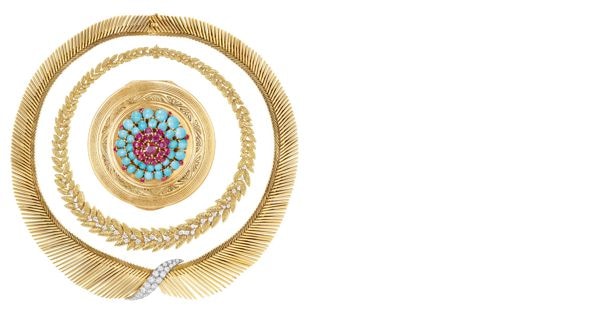
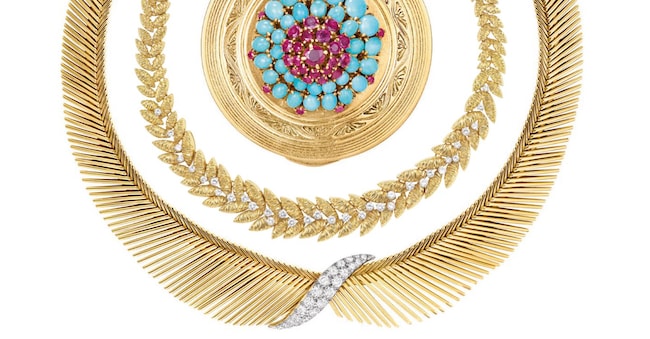
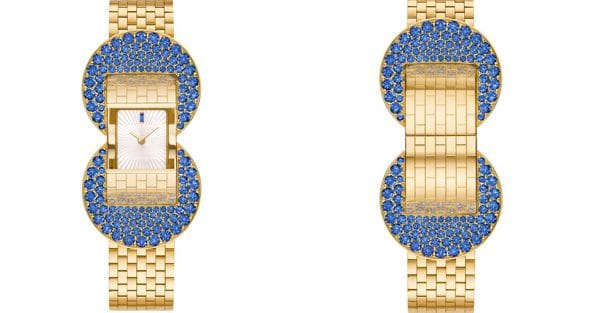
The lady, in short, was bored. And so it was that the extraordinary craftsmen of Van Cleef & Arpels, those eyes, those skilful hands that have been making our every gesture precious since 1906, imagined a small beauty box where every female creature could hide her instruments of seduction and power, a lipstick, a mirror, a powder compact, a cigarette case, a lighter, a notebook with its pencil, a pillbox, and of course a watch. Just a moment, the secret box opened and away from prying eyes everything was there, even the time. And time, or rather the profound gift of resisting the inexorable course of the seasons and preserving the most authentic light, has always been one of the strong and delicate signs of the Van Cleef & Arpels style. It is no coincidence that in 2007, the famous maison created Heritage, a true parallel collection of new creations that re-proposes the masterpieces of a century of charm and savoir-faire to a very select clientele.
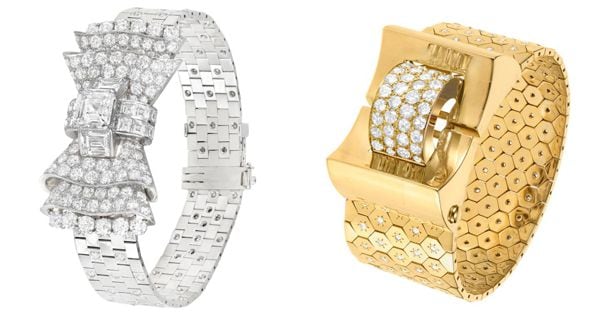
Since 2013, these wonders have been blooming again every year in a unique garden, Tefaf in Maastricht, a fair attended by the most important international galleries, the most prestigious institutions and the most demanding collectors. Here, in a stand that looked as if it had come straight out of a Persian miniature, amid peacocks, leaves, flowers, trees, blue skies and little clouds of fantasy, some forty jewels and precious objects - woe betide calling them accessories - appeared, retracing seven extraordinary decades of the Parisian maison, from the 1920s to the 1990s, with a special focus on the 1960s, so innovative also in the history of art, women and their emancipation.

Small coincidences, just to go back in time Van Cleef & Arpels: in 1963, and this is one of the jewels on display, the maison's ateliers made a spectacular platinum and white gold necklace, composed of two rows of baguette-cut diamonds and brilliants, combined in a central flower with round and oval diamonds, which can be transformed into a brooch, solitary and precious even on a belt, a jacket, the shoulder strap of a dress. Three years later, in 1966, the Maison made the crown of Farah Pahlavi, the last Empress of Iran. Thirty-six emeralds - the one in the centre is one hundred and five carats -, thirty-six rubies, one hundred and five pearls and 1,469 diamonds shine on the crown. Another date also sparkles between the two creations, 13 July 1965, when for the first time French women won the right to open a bank account in their own name, and thus to own a chequebook, and thus to withdraw money, the fruit of their own work or personal income, without being accompanied by their spouse. Maria Callas, then proudly single, must have loved signing the cheque with which in 1967 she had purchased at 22 Place Vendôme, Van Cleef & Arpels' address since 1906, the enchanting Fleur à Cinq Feuilles brooch in platinum, rubies and diamonds.
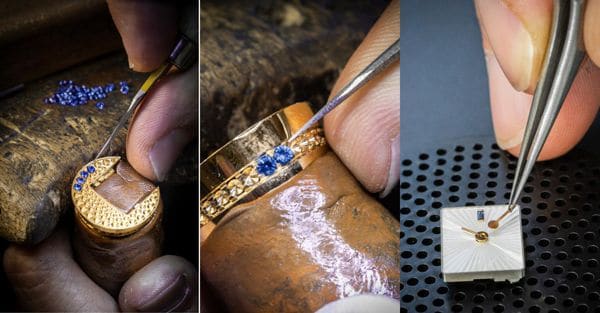
The design that gave rise to this legendary brooch, the Divina's lucky charm, is still in the maison's archives today. And to the archives, like a living memory, turn for their meticulous and necessary research two other important women, Alexandrine Maviel-Sonet, patrimony and exhibitions director, and Natacha Vassiltchikov, high jewellery retail director. She is the one who tells HTSI the story behind each of the more than one hundred and fifty pieces of jewellery in the Heritage collection and, above all, the method used to certify the authenticity of the pieces. The method, as chance would have it, is time again, the time of a very long love affair, which began in 1895 with the marriage between Alfred Van Cleef, aged twenty-one, and Esther Arpels, known as Estelle, aged nineteen, and the time of the documents jealously preserved in the archives, starting with a number engraved in the intimacy of each jewel that corresponds to a dossier, a register, a genealogy of clients, the only clues to establish the authenticity and integrity of each masterpiece. "Strange to say, but it is only in the last forty years that vintage jewellery has returned to radiate its light and is no longer used as a mine of stones, destined wretchedly for new mountings," says Natacha Vassiltchikov. The search for the paper sources is followed by cleaning and eventual restoration in what the staff call the beauty salon, the ateliers where everything comes to life, even a second life, and "where the maison's craftsmen know the difficult balance between what we can do and what we cannot do," continues the director. The patina is the test of time, precious, and is combined with another magical quality, wearability. For it to arrive in the windows of Tefaf or on a small tray in the historic boutique, a Van Cleef & Arpels jewel must continue to dialogue with the fashion of our time. Emblematic, wearable, always contemporary, this is the Heritage spirit.