
Trade, energy and rare earths: Modi's India breaks Myanmar's isolation
The Indian Prime Minister received in New Delhi the new president of the former Burma that deposed Nobel Peace Prize winner Aung San Suu Kyi in 2021
from our correspondent Marco Masciaga
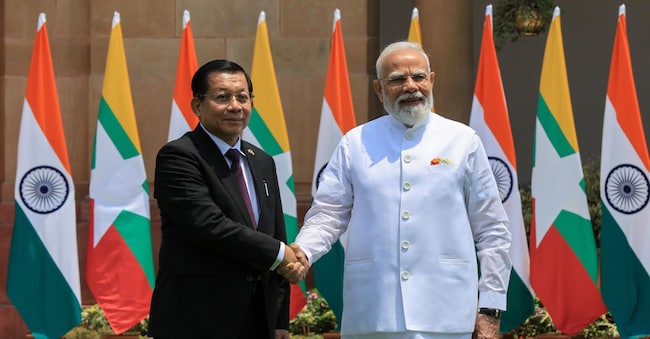
NEW DELHI - India's Prime Minister Narendra Modi yesterday helped chip away at Myanmar's international isolation by receiving newly appointed President Min Aung Hlain in New Delhi. For the former Burmese general who played a leading role in the 2021 coup that deposed and imprisoned Nobel Peace Prize winner Aung San Suu Kyi, it was the first official visit abroad since the controversial elections a few months ago that sanctioned his transition from head of the military junta to head of state.
At the end of the meeting, the two leaders made no statements.
India's foreign secretary Vikram Misri explained that Modi and Min Aung Hlain discussed trade, defence, border management and expanding economic, infrastructure and technology ties. Among the areas in which the two sides agreed to deepen cooperation are trade, energy and critical minerals.
Democracy activists' protests
Burmese pro-democracy activists expressed concern and argued that Min Aung Hlaing's visit to India will contribute to the legitimacy of the military-backed government. "We condemn India's decision to host Min Aung Hlaing, a war criminal who is waging a campaign of terror against the people of Myanmar," explained Yadanar Maung, spokesperson for the activist group Justice for Myanmar.
"India must change course, stop ascribing a false legitimacy to the junta, stop profiting from the military's campaign of terror against the population, and instead support the people of Myanmar, who are fighting and sacrificing every day for a federal democracy," continues Yadanar Maung, who accuses India of supporting the neighbouring country's armed forces through military training programmes and economic relations.


