
Energy Communities, why the mechanism fails to accelerate
At the end of December, according to the Gse, the installed capacity of Cer in our country reached 174.5 MW, for 1,805 operational configurations and 18,263 members

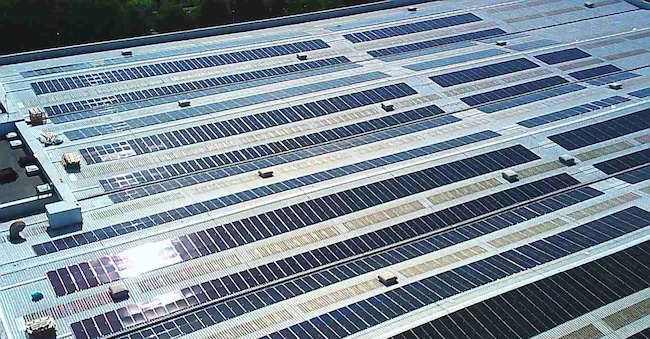
Renewable Energy Communities (RECs), the first chiaroscuro balance for an incentive mechanism that was expected to reach 5 GW by 2027: numbers are growing, but remain small. According to the data as of 31 December 2025, published by the Gse, the installed capacity of Cer in our country comes to 174.5 MW, for 1,805 operational configurations and 18,263 members. Pulling ahead is Piedmont with 288 communities for 49 MW. They are followed by Lombardy with 261 for 17 MW, Veneto with 199 for 18 MW, Sicily with 169 for 11 MW, Tuscany with 95 for 6 MW, Trentino Alto Adige with 88 for 7 MW, and Puglia with 85 for 4 MW.
Small size
If we compare the last two years - with due precautions for a measure that actually started in the spring of 2024 after the Cacer decree came into force on 24 January of that year - we can see, again from Gse data, that in 2025 the number of plants started up in Italy doubled: from the 526 of 2024 (also including those prior to the Cacer decree), for a total installed power of 69.2 MW with 5.881 member customers, to 1,055 in the year just ended, which, however, saw a decrease to 67.9 MW installed, for 9,245 members. The size of the interventions remains small and the impact minimal in the national context, considering that in the last two years Italy has installed renewable capacity for 7.5 GW in 2024 and 6.4 GW in 2025 (Terna data updated in November). Overall, 43% of Italian CERs have a capacity between 0 and 10 kW, while another 20% reach 20 kW.
If we also include the other configurations of widespread self-consumption - those prior to the Cacer decree that established the rules of the Cer and the current incentives; collective self-consumption groups and remote consumers - the numbers are higher, but Cer still proves to be the most widespread experience. In all, at the end of 2025, the Gse registered 2,779 configurations for 252 MW and 25,933 associated customers.
Pnrr Funds
"The Cer market got off to a very timid start in 2024 and it can be said that it has never developed, i.e. it has not reached critical size and mass given that the average size of a community is 96 kW. Of course, it will be able to benefit from the large number of installations that have applied until 30 November for non-repayable contributions from the NRP. However, these will not make it possible to reach the 5 GW targeted by the measure (the Gse certifies requests for 3.3 GW, ed). It is only half a satisfaction,' comments Andrea Brumgnach, one of the vice-presidents of Italia Solare, the Italian photovoltaic association. 'Two unknowns also remain,' he adds: the Pnrr requests for 1.4 billion for a measure refinanced with 795.5 million euro. And the Pnrr-related implementation timeframes, for which we are all waiting for the so-called Facility mechanism that postpones the end of works even after 30 June 2026'.
Complicated mechanism
What are the reasons for this lack of success? "It is a very bureaucratic mechanism, complicated, difficult to manage, unattractive from an economic point of view, given that the incentives yield 30-50 euro per user per year in the bill, and finally very little known," Brumgnach replies. "The regions," he continues, "have moved with their own initiatives to support Cer, for example Piedmont, Lombardy, Veneto, Valle D'Aosta and Friuli Venezia Giulia. However, it does not seem that this has produced the hoped-for momentum, indeed we understand that Valle D'Aosta and Veneto have extended the calls, perhaps due to lack of demand. The regions could invest in dissemination instead. As an association, we are not interested in asking for increases in economic incentives: for us, the crucial aspects remain bureaucratic simplification and the dissemination of the mechanism'.


