
Energy companies lead the ranking of the ESG champions
Among the 240 Sole 24 Ore-Statista sustainability leaders, the energy and raw materials sector under pressure from the geopolitical crisis stands out. As many as 35 new entrants and a growing focus on the environment, social issues and transparency

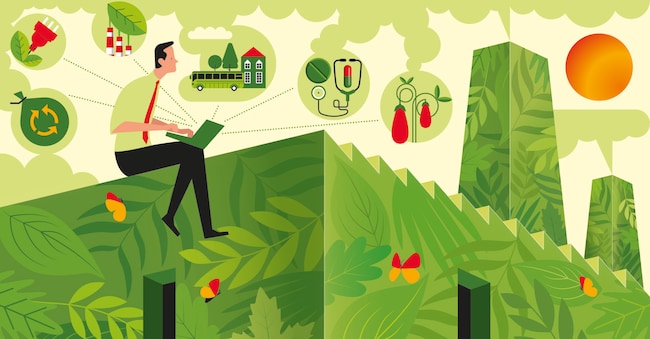
In the midst of one of the most acute crises ever, between the conflict in the Middle East and that between Russia and Ukraine, it is the energy sector that is the most represented among the Leaders of Sustainability 2026 of Sole 24 Ore and Statista. The silver medal goes to the 'industrial products and components' sector, which topped the list last year, while in third place are companies that manufacture finished products and consumer goods and banks. The list lists the 240 companies (200 large ones, with revenues in excess of 100 million, and 40 medium-small ones, listed in alphabetical order) that have distinguished themselves for their commitment and actions on the ESG policy front: in ecological, ethical and social transition and with governance capable of accompanying these changes. A new course written in black and white in sustainability reports. Well-known names and long-standing presences, but also new entries: this year there are 35 (24 large and 11 medium-small). United by sustainability in name and in fact and ready to take up the challenge of transparency so as not to be caught unprepared by the rainfall of regulations on the subject coming from Brussels.
Growing Awareness
"All the companies on the list also recognise the value of sustainability reporting for improving the organisation and the business and not only for compliance. Year after year," emphasises Lisa Dei, head of research for Statista, "in general there is a growing awareness among the winners of the increasingly articulated ESG commitment. In this edition, we have in fact revised and updated the indicators in light of the latest trends in corporate reporting'. In the social chapter, the section on diversity has been expanded to include an analysis of the number of incidents of discrimination reported, as well as the section on safety in the workplace (severity rate of accidents occurring in the company and training hours). In the governance chapter, the focus was also broadened to include some transparency measures, such as the presence of a sustainability data audit and summary tables of key data at the end of sustainability reports.
Playing in advance
It is also not surprising that as many as 202 winners received an external audit of their report. In fact, the sustainability reports analysed refer to 2024, when the reporting obligation under the first version of the CSRD directive for large companies, banks and insurance companies begins. In the meantime, the Omnibus package approved last February not only lightened the burden but also narrowed the scope to companies with more than 1,000 employees and 450 million euro in annual net revenue. However, the steps taken even by companies that were subsequently excluded from the reporting obligation will prove to be a competitive advantage in view of the new regulations to come. Such as the directive (2024/825) combating greenwashing and banning generic environmental claims and labels without scientific and certified evidence: as of 27 September, companies will have to apply it.
The sectors
"One macro sector that has been devoting increasing efforts to the topic of sustainability for years," says Dei, "is Energy, Procurement and Raw Materials. As many as 37 companies, or 15% of the total, stand out on the list. Committed to the green transition, they also stand out for their efforts in the social component. In addition to names already present in past years such as Edison, the electrical services manager Gse and Italgas, this year there are six new entries: Acea, Acque, Gruppo Enercom, Gruppo Iren, Terna and Unoenergy. The plant engineering and construction sector accounts for 6% of the list, with Saipem standing out in particular for its social performance. Among the winners, there is also a large number of local public transport companies grappling with the green transition of their fleets, just as representatives of the pharmaceutical industry such as Chiesi and Angelini Pharma, one of the companies in the Angelini Group, are confirmed as sustainability leaders. Not only that. The 2026 ranking rewards numerous companies committed to the circular economy that are already preparing the ground in view of the Circular Economy Act of the EU Commission that will see the light in the third quarter.
At the territorial level, Lombardy and Emilia-Romagna are confirmed at the top with more than half of the companies awarded, but Veneto and Lazio are advancing. The list also includes 40 smaller companies that are not obliged to draw up a sustainability report but publish it on a voluntary basis. Such as Spindox (IT), Caleffi (household linen) and two new entries such as Ferrarelle and Bolton. Some, such as Way2Global and Fedabo, have gone a step further by becoming benefit companies and B corporations, demonstrating a constant and lasting sustainable commitment.


