
Energy efficiency, residential investments halved in two years
Research by the Politecnico di Milano captures the efficiency trend

3' min read
Key points
3' min read
The superbonus effect overwhelms, this time with a strong negative sign, investments in energy efficiency in the residential sector. After the sprint of previous years and the peak recorded in 2022, 2024 marks a substantial step backwards, halving the levels reached two years earlier. This is stated by the numbers contained in the Energy efficiency report 2025, drawn up by the Energy&Strategy of the School of Management of the Politecnico di Milano, to measure the progress of the work our country is doing to reduce its energy consumption.
The situation in the different sectors
.The report lines up the situation of various sectors, such as the tertiary and industry sectors. But it confirms that the residential sector is still decisive in the geography of investments made in efficiency: in 2024, out of an estimated total of between 58 and 66 billion euro, around half of this concerned homes. And it is here that the superbonus effect is clearly visible.
The maxi subsidy, which peaked at 110% and was then gradually reduced until it disappeared by the end of 2025, saw its best season in 2022. That year, according to the report, energy efficiency investments in residential buildings rose from 38 billion in 2021 to over 60 billion. Already by 2023, however, a movement in the opposite direction began, with a contraction to EUR 48 billion. And the estimates for 2024 speak of a substantial further step backwards, with a return to EUR 31 billion, half of what was made in 2022. This occurs while, for the other sectors observed, the figures are stable.
The influence of the superbonus
."The residential sector," says the report, "was strongly influenced by the superbonus, which accounted for more than 60 per cent of the amounts supported by building bonuses between 2021 and 2023. This incentive gave a strong boost to investment, but its gradual reduction has had a significant impact, leading to a drop in demand over the past year'. Although the contraction is not surprising in itself, the level of the drop is certainly remarkable: residential returns are well below the levels of 2021, when the superbonus was still kicking in (it was activated in the summer of 2020).
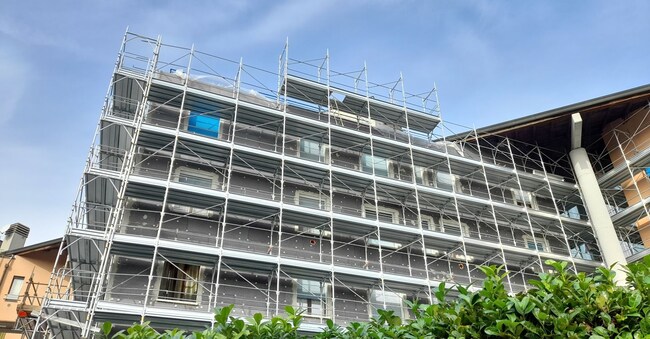
The report also highlights how the 110% caused a transhumance of investments from one facility to another: 'Following the introduction of the superbonus, in the following three-year period, the amounts disbursed through ecobonus and home bonus decreased by 52%, while the superbonus increased by 54%, partly replacing them. This shift in resources changed the distribution of financing in the residential sector, influencing the evolution of the energy efficiency market'. In other words, some interventions, such as thermal coats, have ridden the wave of the superbonus while being penalised by being framed with other subsidies. "To reach the efficiency levels required by the superbonus it was necessary to work on vertical surfaces, so thermal coats were rewarded. Now these works go back to a similar level of facilitation as all the others," says Vittorio Chiesa, founder and director of Energy&Strategy.


