
Energy-saving habits, green homes and higher temperatures: this is how we’ll save 1.2 billion cubic metres of gas this winter
According to a study by Enea, the saving of 0.9 billion Smc would come from the residential sector, with the remainder coming from the commercial sector

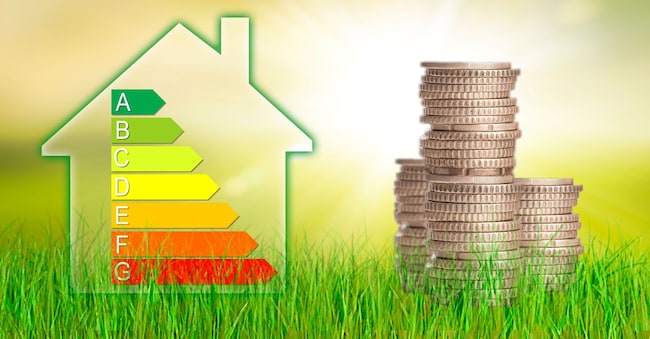
Next winter, we could save up to 1.23 billion cubic metres of gas across the residential and commercial sectors. This is the amount needed to heat around one million homes. This is according to a study on energy consumption trends carried out by Enea, the National Agency for New Technologies, Energy and Sustainable Economic Development. According to the Agency, such significant savings could be achieved through refurbishment projects and energy-saving and efficiency measures, such as replacing old gas boilers and the introduction of the ETS2 scheme.
Residential and tertiary sectors
According to the study, savings of 0.9 billion Smc of gas could be achieved in the residential sector. Of this, 0.8 billion would come from the reintroduction of measures to curb natural gas consumption, as provided for in the National Plan adopted in 2022 following the energy crisis triggered by the Russia-Ukraine conflict. The remainder would come from refurbishment projects, supported by incentives such as the Ecobonus and the Bonus Casa.
As for the tertiary sector, however, the reduction in consumption is more modest and is estimated at around 0.3 billion Smc. Most of this is thought to stem from demand-reduction measures (0.25 billion), whilst 0.06 billion is attributed to efficiency measures such as, for example, the replacement of old gas-fired generators with modern heat pumps, as well as ETS2, the scheme that will extend the emissions trading system to include buildings (residential, commercial and institutional).
“The ETS2,” explains Francesca Caffari, a researcher at the ENEA Laboratory for Energy Efficiency in Buildings and Urban Development, “will lead to higher costs for those who continue to use fossil fuels (up to 230 euros per household per year)” whilst those who convert their homes into zero-emission buildings, eliminating the use of fossil fuels, “will not be affected by the economic impact of the new system”.
Structural measures
However, as the study emphasises, more structural efficiency measures will also be necessary, whilst acknowledging the importance of cost-containment measures such as regulating room heating temperatures, which deliver the greatest short-term savings. According to Nicolandrea Calabrese, head of the Enea Laboratory for Energy Efficiency in Buildings and Urban Development, replacing obsolete systems and insulating buildings ‘ensures a stable, progressive reduction in energy consumption that is independent of users’ daily habits, thereby protecting the country from fluctuations in the energy market’.

