
Energy, health and maritime development: Tokyo partners with Horizon Europe
Japan has officially joined the second pillar (which accounts for 52 of the 95 billion in funding) of the Commission’s project. This also presents opportunities for Italia, partly due to the current political climate

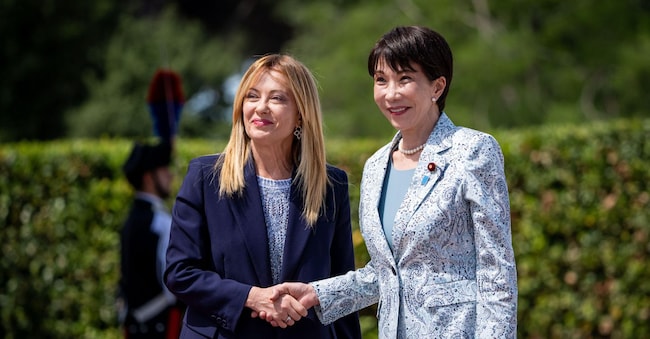
Following negotiations that began almost a year ago, Japan has officially become a partner in Horizon Europe, the Commission’s largest programme for funding research and innovation, with a seven-year budget of €95.5 billion. The agreement allows Japanese researchers and organisations to participate in Horizon Europe on the same terms as those applicable to EU Member States and other associated countries. They will be able to join and lead international research consortia, receive European funding and collaborate with leading research institutions to tackle global challenges. Furthermore, this agreement will reduce administrative barriers: cooperation with Japanese partners will become more straightforward in terms of eligibility and funding. It will also be easier to set up consortia between the EU and Japan. Specifically, Tokyo joins directly under Pillar II of the programme, which alone accounts for over 52 billion in funding and focuses on health, climate and energy, digital technology, industrial development, mobility, food security and the bioeconomy. With a population of 123 million, Japan is the most populous country associated with the programme, as well as the 23rd largest after New Zealand and Israel, and brings one of the world’s most advanced research and innovation ecosystems to the European scientific cooperation network.
Opportunities between Tokyo and Rome
For Italia, this could certainly mean greater competition within consortia, but overall it offers Italian universities, the CNR, the IIT, clinical centres and technology hubs the opportunity to engage Japanese partners with less administrative red tape and greater certainty regarding funding. Japan is, of course, a major player in the fields of robotics, advanced materials, semiconductors, precision manufacturing, batteries, mobility and healthcare. For many Italian groups, this means raising the technical standard of their proposals and capitalising on the current favourable climate between the two countries. We are not referring solely to the close relationship between the two prime ministers, Giorgia Meloni and Sanae Takaichi, but to the industrial ecosystem that culminates in the sixth-generation Gcap aircraft project (the platform involving not only Italia and Japan but also the UK and, more recently, Canada). Last June, Italia and Japan signed a memorandum of cooperation with the aim of mutually safeguarding their value chains, particularly in the areas of sensitive raw materials and conductors. The aim is to extend joint activities not only beyond the narrow confines of the two countries but also to multilateral partnerships. And it is within this broader framework that it is worth analysing the specific focus on Horizon and its wider implications for Italia.
The dual-use sector
The sectors that stand to benefit most from Japan’s involvement are therefore those involving dual-use applications and the sector where new technologies intersect with the maritime environment. A prime example is that of superconducting ships. Last spring, a presentation was held in Brussels on the programme (under Horizon) dedicated to advanced energy storage systems for zero-emission maritime transport. These projects (V-ACCESS, AENEAS, NEMOSHIP and POSEIDON) represent a European investment of over 20 million and, above all, bring together 50 research institutes, universities and industrial organisations, many of which are Italian. Fincantieri, RINA and ASG Superconductors are involved in the V-ACCESS project. To elaborate further, the technologies proposed by the project develop hybrid systems that combine traditional batteries with supercapacitors and superconducting SMES, which, in this specific case, utilise magnesium diboride (MgB₂) technology. Asian competitors are well ahead, not only in the field of batteries. But also in the field of energy storage systems. This model, in itself, represents cutting-edge technology and aims to bypass the problems associated with ‘full load’ peaks. So, from today, Japanese partners will also be able to join cutting-edge projects such as those involving superconductivity on an equal footing. And once they are ready for the go-to-market phase, it goes without saying that, given the scale of the shipping industry, there are prospects for an innovative industrial supply chain that will provide employment for companies and new professionals in the sector. The ships -as Il Sole 24 Ore has already reported – are now so heavily electrified that the role of electrical officer has become necessary: a role that could no longer be managed by engine officers alone.
The Indo-Pacific
Beyond individual details, the extension of Horizon to the furthest reaches of the Indo-Pacific is a further sign of just how important it is for us, too, to maintain a presence in the region and capitalise on the opportunities it offers in terms of security and technological development. The medium- and long-term geopolitical challenges are leading us to look in a direction that passes through the Middle East and then heads directly eastwards.

