
High energy prices, EU studies partial coverage of increases but no touching of the Pact
The European Commission will present at next week's summit in Cyprus a package of measures to better address the energy shock caused by the war against Iran

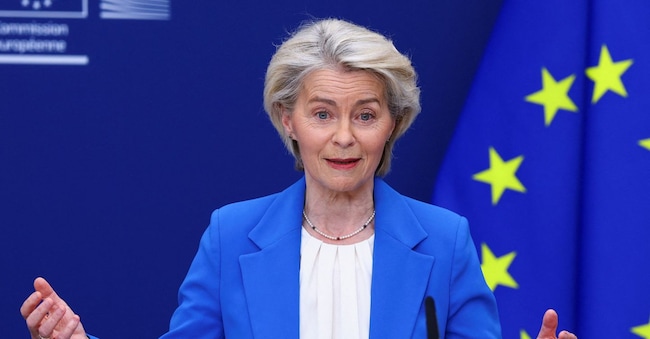
BRUSSELS- The European Commission announced yesterday that it will present at a summit in Cyprus next week a package of measures to better address the energy shock caused by the war against Iran. Among the measures: new flexibility in state aid, measures on electricity taxation, and better coordination between member states in the purchase of gas. As for the hypothesis of relaxing the budgetary rules, 'at this moment the conditions do not exist'.
In a press point here in Brussels yesterday, European Commission President Ursula von der Leyen made it clear that any support measures decided by governments must be 'targeted at the most vulnerable groups in society and of a temporary nature'. The EU executive intends to develop a new framework to regulate extraordinary state aid in the 'most exposed sectors'. The measure is expected to be adopted within the month.
In a press release, the European Commission went on to say that it had opened a period of consultation with member states on the measures to be taken. The sectors under consideration are agriculture, fishing, road transport and short sea shipping within the EU. The support could take the form of covering part of the increases in fuel or fertiliser prices, compared to the levels before the outbreak of the war against Iran.
Furthermore, Brussels proposes simplified measures in the granting of 'limited aid' to individual companies (excluding maritime transport) as well as an increase in aid for energy-intensive companies. Finally, the initiative, similar to what was decided during the pandemic, envisages the possibility for the Commission to authorise subsidies on a case-by-case basis for the purchase of fuel used in power generation. In this regard, it should be mentioned that the Italia government is already discussing with Brussels some measures of the recent Decreto Bollette.
In this context, Ms. von der Leyen confirmed the objective of avoiding new drifts in public accounts (see Il Sole/24 Ore of 3 April). In this regard, she explained that "at this moment the conditions" for a relaxation of the budget rules "do not exist". The gaze runs to the request by some countries, including Italia, to trigger the emergency clause already used in 2020-2022, on the occasion of the pandemic and then the Russian invasion of Ukraine.


