
Energy price rises: businesses fear bills of 18 billion
Gas Intensive’s estimate for energy-intensive sectors (including steel, paper, chemicals, ceramics and glass): at current prices, there is a risk that costs could double year-on-year

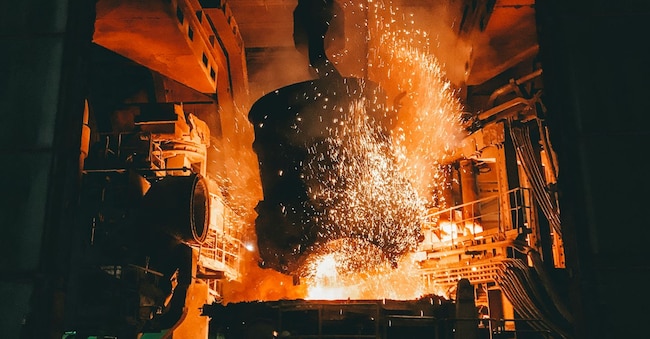
“For gas-intensive businesses, the rises in gas prices seen in recent weeks as a result of tensions in the Middle East are a cause for great concern: these follow on from previous price rises, resulting in a doubling of energy costs – taking into account both the increases in gas and electricity prices – from 9 to around 18 billion euros, when projected on an annual basis.” Aldo Chiarini, president of Gas Intensive – which brings together the sectors of major gas and electricity consumers – attempts to quantify the impact of the surge in energy prices on Italy’s energy-intensive manufacturing sector. The consortium estimates that, if current spot prices were to remain constant (yesterday, gas on the TTF closed at 72 euros per MWh, a level not seen since January 2023), the entire sector (including steel, paper, chemicals, ceramics, glass and cement) could find itself paying – on a projected annual basis – 133 per cent more for gas and 87 per cent more for electricity. This would have clear repercussions on competitiveness: ‘With gas prices consistently above 70 euros per MWh, it becomes very difficult, if not impossible, for many manufacturers to operate competitively,’ explains Chiarini. ‘Some companies are already considering whether to restart production after the summer break or whether, at these price levels, it would be more cost-effective to remain shut down. Others, which cannot shut down their plants, will be forced to produce at a loss for as long as they can.”
Added to this is the approach of winter: “We are starting the season with European gas storage levels at just 65 per cent – lower than in previous years – and therefore with potentially greater risks in the coming months,” he notes. Measures such as the implementation of the liquidity scheme under the Bollette Decree – to eliminate the PSV-TTF spread (between the Italian hub and the Dutch reference hub) – and an interruptibility scheme (a remunerated interruption of gas withdrawals by a large consumer) ‘tailored to this year’s exceptional circumstances’, says Chiarini, who also acknowledges the need for extraordinary measures, ‘in the wake of those adopted during the 2022 energy crisis, alongside a long-term supply scheme for gas-intensive businesses that allows access to supplies at prices comparable to those of LNG on foreign markets’.
The various sectors follow a similar pattern: “For the paper industry, assuming a constant price of 70 euros per MWh throughout the year, gas expenditure would rise by one billion euros, increasing from 0.8 billion in 2025 to 1.8 billion in 2026: more than double,” says Assocarta president Lorenzo Poli, noting that gas price levels in 2026 have not been seen since January 2023 and that peaks in the PSV-TTF spread have exceeded 4 euros per MWh (they stood at 2.9 in 2025). “We have estimated that, since the start of the year, the gas bill for glass production has risen by 90 million euros, to which must be added a further 20 million euros or so in the PSV spread,” adds Vitaliano Torno, the new president of Assovetro: “Under these conditions, many of our sectors – such as reinforcing fibres, glass for household goods, but also automotive glass and packaging – which are already under pressure from often unfair international competition and weak demand due to the general economic slowdown, will not be able to maintain production in our country.” Faced with the risk of losing significant parts of the national manufacturing base, there is a widespread call for urgent measures: from the implementation of the ‘Bollette’ decree to measures that can alleviate energy costs for businesses.
Steelworks are also facing a critical rise in energy costs (estimates suggest an increase of 15–20 per cent for gas and 30–40 per cent for electricity by the end of the year if the summer trend continues). According to Federacciai president Antonio Gozzi, ‘we need to take action with targeted policies to support energy-intensive businesses. This is not about calling for emergency measures without a long-term vision, but about creating structural conditions that will enable our companies to continue competing on international markets, to invest and to maintain our position as the world’s most decarbonised steel industry’.


