
Eni-Nigeria, the Supreme Court puts an end to the trial
After the acquittals of the top executives and the exclusion of liability of Eni and Royal Dutch Shell plc, the Supreme Court closes the case with the

2' min read
2' min read
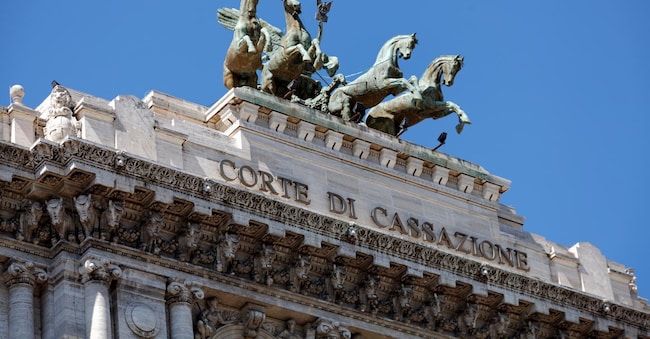
The Cassazione Court of Cassation, with sentence no. 22920, has put an end to the Eni-Nigeria judicial affair arising from the accusation by the Procura di Milano of alleged international corruption in connection with the 1.092 billion lire bribe relating to a concession in Nigeria for the Opl 245 oil field. The case involved 13 defendants, including ENI's CEO Claudio Descalzi and his predecessor Paolo Scaroni, who were acquitted both at first instance, with the formula "because the fact does not exist", and by the Court of Appeal, which upheld the first instance ruling and also ruled out the liability of ENI and Royal Dutch Shell for administrative offence under Legislative Decree 231/2001.
A verdict, that of the territorial court, against which Nigeria had appealed, having filed a criminal case for civil purposes only, requesting compensation of over one billion euros. The request was withdrawn by the African Federal Republic's ambassador to Italy, requesting the extinction of the proceedings, as did the defence counsels of Claudio Descalzi and Paolo Scaroni, who asked the Supreme Court to declare the extinction of the trial relationship.
The regularity of the special power of attorney for revocation
.A request accepted, by the Supreme Court, which took note of the regularity of the special power of attorney for the revocation of civil plaintiffs, with respect to both natural and legal persons, presented by the Ambassador of the State of Nigeria in Italy "or by authority which, according to established case law, has the function of representing, to all intents and purposes, its own State before the foreign State where it is accredited, not exhausting its activity in the strictly political and public field, but also extending itself - without any rule of international law precluding it - to every other field, including the private one, in which it is necessary to protect the interests of the State represented". With the consequence that "the ambassador is legitimised, as such, to represent his own State in proceedings to which the latter is a party, even if they relate to private relationships, such as that in matters of compensation for damage caused by an unlawful act, without the need for any particular act of authorisation, since the representative power is carried out through a relationship of organic interpenetration".
The Court of Cassation states that, since there are no civil statutes to be removed, the civil party's request to set aside the judgment under appeal cannot be granted.
Nor - the Supreme Court recalls - can the revocation of the joinder of a civil party lead to the annulment of the sentence pronounced by the Court of Appeal against the civil party for the payment of the trial costs, due to the administration of justice. The part of the decision sentencing the civil party to pay the costs of the trial advanced by the State does not in fact concern the civil action "nor the civil liability of the defendant, but only the different liability of the private party for the costs of the trial resulting from the exercise of the power of appeal".

