
Eni-Snam, first CO₂ capture and storage project in Italy
Ravenna CCS plan kicks off, first project in Italy: energy-intensive industry decarbonisation hub is born

3' min read
3' min read
It will be the first project for the capture, transport and permanent storage of CO₂ in Italy and, in the future, will become the Italian hub for the decarbonisation of the energy-intensive industry. Launching it today are Eni and Snam, through the joint venture created for this purpose. The total investment is estimated at EUR 1.5 billion.
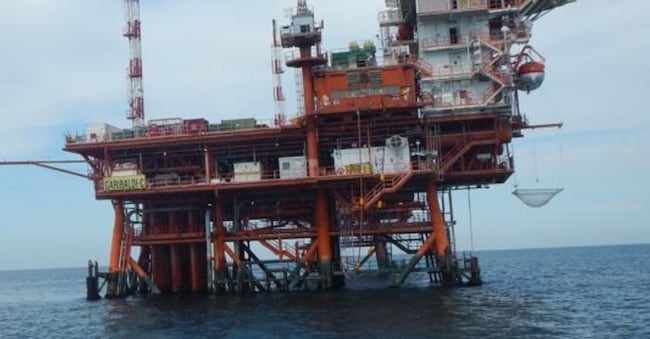
Phase 1 aims to capture, transport and store the CO₂ emitted by Eni's natural gas processing plant at Casalborsetti, in the municipality of Ravenna, estimated at around 25,000 tonnes per year. Once captured, the carbon dioxide is transported, through pipelines previously used to transport gas and now reconverted, to the Porto Corsini Mare Ovest offshore platform, to be injected into the depleted gas field of the same name where it is stored at a depth of about 3,000 metres.
The project is guaranteeing an abatement level of more than 90%, and with peaks of up to 96%, of the CO₂ coming out of the power plant's stack with a carbon concentration of less than 3% and at atmospheric pressure, the most severe conditions to date from an industrial point of view. This performance places Ravenna CCS as the world's first industrial-scale project with such capture efficiency.
Another distinctive element of the project is the supply of electricity from renewable sources to the Casalborsetti power plant's capture plant, resulting in the avoidance of further CO₂ emissions.
"A project of great importance for decarbonisation has become an industrial reality. The capture and storage of CO₂ is an effective, safe and available practice now to reduce emissions from energy-intensive industries whose activities cannot be electrified," commented Claudio Descalzi, Eni's number one. "We are using our depleted fields, our existing infrastructure and our know-how in re-injection techniques to offer a very competitive service for which we are attracting great interest. We are tackling the complexity of the energy transition with concreteness and determination, increasing and enhancing the solutions at our disposal to decarbonise our activities and the various areas of economic and industrial systems. From renewables to biofuels, from CCS to sustainable chemistry - we are committed to providing our customers with a variety of solutions with a constant focus on economic competitiveness and the real demand of those who have to use energy to work and produce.


