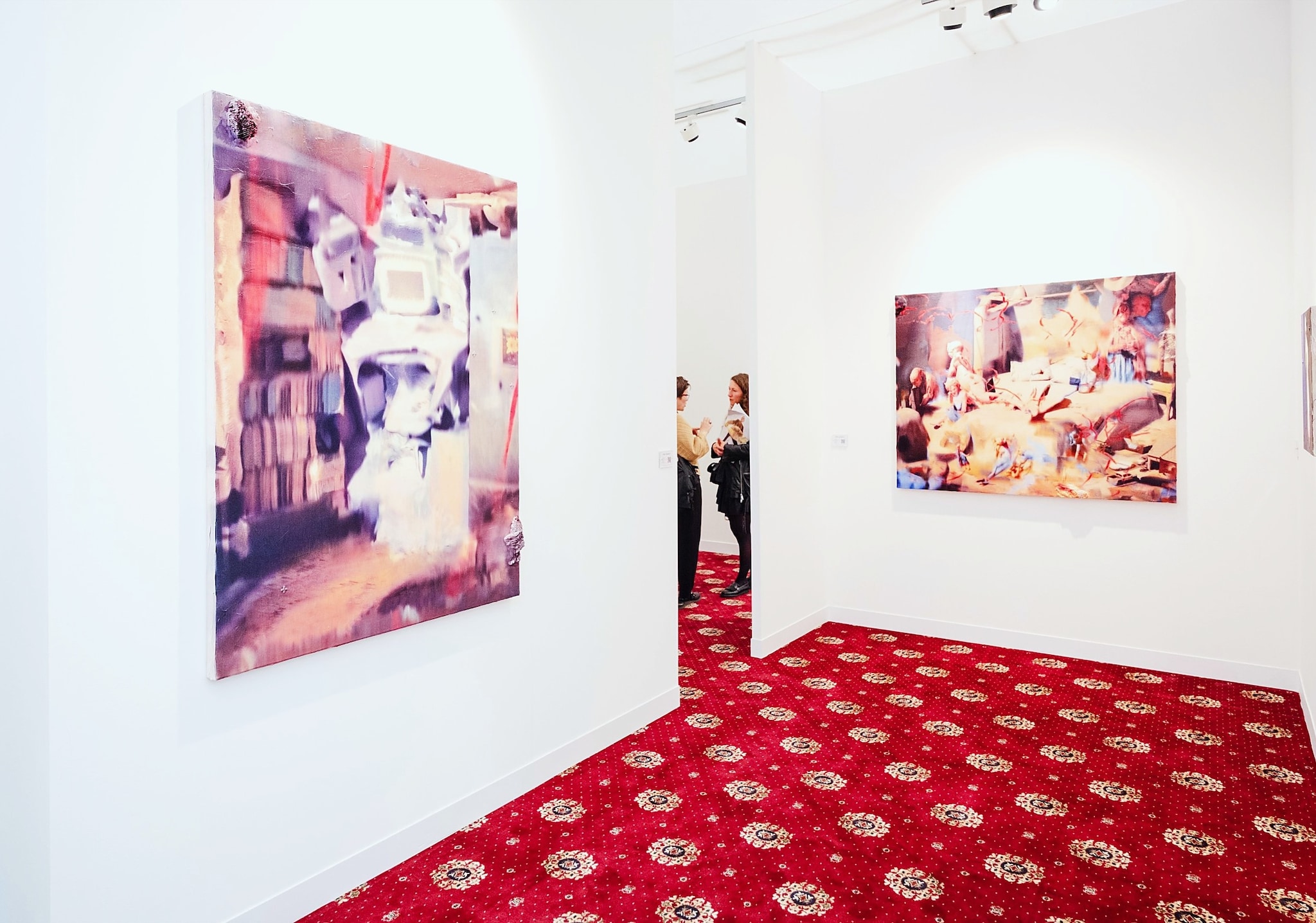
Enthusiasm at Frieze London – the world’s problems are left at the door
Sales are going at a brisk pace and stands are sold out. The trade fair once again proves to be a thrilling event that does not reflect day-to-day business

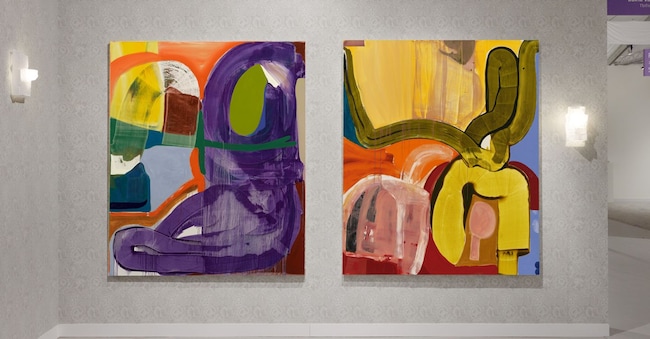
“London’s weather is notoriously unpredictable. Frieze, fortunately, is not. The fair got off to a flying start, and so did sales.” This was the comment from Brussels-based gallery owner Xavier Hufkens following the first VIP preview on Wednesday 14 October. By 4 pm, the gallery – which celebrates its 40th anniversary next year – had sold 17 works, including a historic work on paper by Richard Serra for $750,000, two neon works by Tracey Emin at 95,000–105,000 pounds each, and three sculptures by Mark Manders at 120,000 euros each.
The London art fair, which closes on 18 October, got off to a flying start. At least four stands sold out within the first five hours: not only a major gallery such as Gagosian, but also an up-and-coming gallery making its Frieze debut, such as Alice Amati, an Italian gallery owner based in London.
Current issues
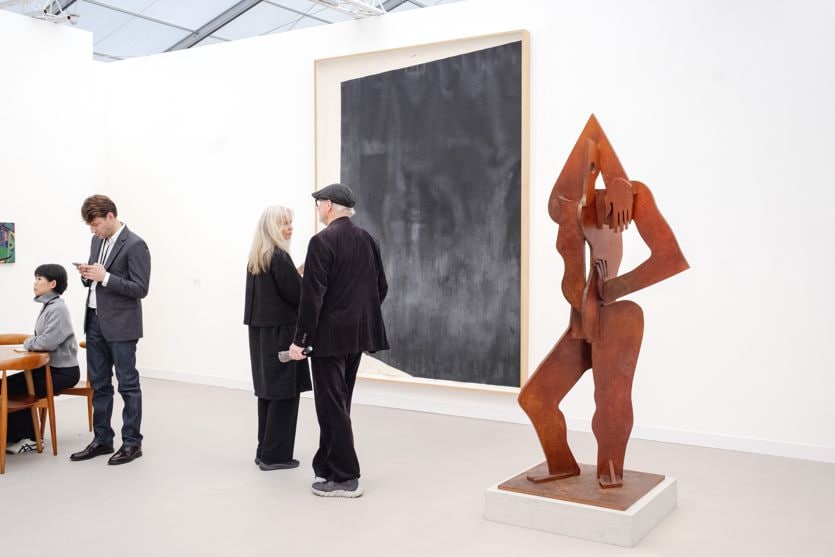
Wars and crises seem to remain outside the Frieze tent; inside, there is nothing but enthusiasm and passion for art; it is like a bubble where one forgets about the problems outside. And yet the artists do reflect on current issues, particularly at a fair like Frieze London, which is entirely focused on the present and on living artists: from Ukraine (Nikita Kadan at the Voloshyn Gallery stand with his depictions of raves in Kyiv, works priced from 6,000 to 90,000 euros) to the wars in the Middle East (Ahmad Ghossein at Marfa’, with photographs and videos sent to the artist by his father from the south of the country to reassure him, reproduced on screens and tapestries, €6,000–30,000) to feminist technoscience (Yuli Serfaty at the Xxijra Hii stand, £1,000–12,300) to artificial intelligence and our consumption of images (Payne Zhu at the Spurs Gallery stand, in the section ‘The Code Universe’, curated by Carol Yinghua Lu, director of the Inside Out Art Museum, Beijing, and co-curator of the 2027 Istanbul Biennial).
The energy of the fair
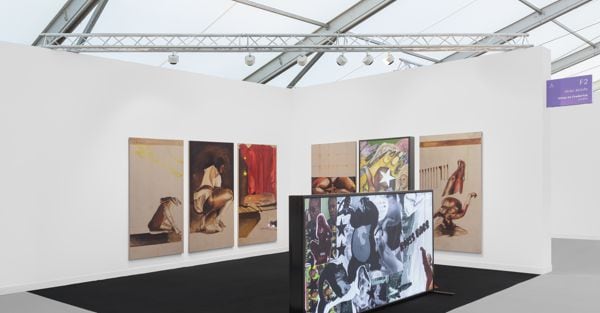
The brisk pace of sales does not necessarily reflect day-to-day business, which – as even leading galleries report – has slowed down compared with previous years; however, the fair attracts a large concentration of collectors who come from all over the world specifically to buy. Fortes D’Aloia & Gabriel also sold out, with paintings by Márcia Falcão (1985), which stem from a desire to protect the female body from violence (30–60 thousand dollars): it is one of two solo stands – both by women – chosen by the Frieze selection committee to be situated at the entrance to the fair. From the 2024 edition onwards, in fact, the two most prominent stands are allocated to those who apply with a monographic proposal. The other is also by a young woman: Agata Ingarden (1994), presented by the German gallerist Berthold Pott, exploring urban changes and how these alter our conception of home and belonging.
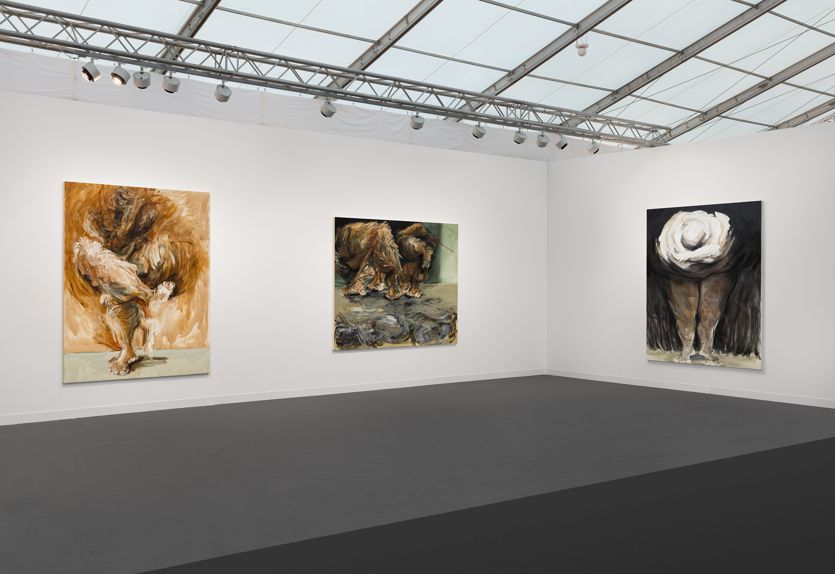
The Edel Assanti stand also focuses on the home environment; it has been transformed by the artist Marcin Dudek into the house in Kraków where he grew up with his family; each room features a different artist from the gallery, including Lonnie Holley, Vinca Petersen and Sheida Soleimani . The gallery sold two paintings by Thornton Dial, for between 160 and 230 thousand dollars. At Bukia Vakhania’s stand, in the Focus section, the atmosphere of a home has also been recreated with William Morris wallpaper, paintings by Tamo Jugeli and sculptural lighting by Lado Lomitashvili. “This is our third time taking part and it’s better than last year,” commented the gallery.