Bankitalia annual report on the regional economy

Environment and digital, Lombardy enterprise accelerates and invests more

In 2023 +4.4%. Over 100,000 jobs added in the year. Unemployment at 4% but for research and patents Europe remains far behind.

4' min read

4' min read

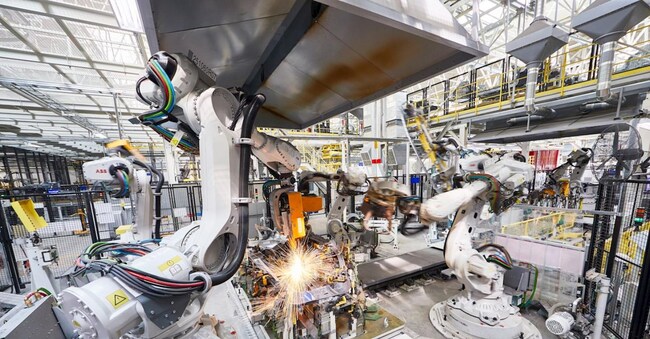
They invest, despite everything. The 2023 resilience of investments by Lombardy's manufacturing companies is among the most significant data in the Bank of Italy's latest report on the regional economy. An annual analysis that records, as is natural, a widespread slowdown in activity (-1.1% production in the first quarter), within a framework of substantial resilience that starts with investments. While last year's survey showed a 3.2% drop in business intentions, on balance there was a 4.4% growth.

This is particularly true for twin transitions: almost two thirds of companies have implemented or plan to implement actions for energy efficiency and the use of renewable energy sources, while almost 60% have invested in digital technologies. Almost all the largest companies have done so, one in two among SMEs.

Loading...

Loading...

Investments made within a less favourable context, with interest rates rising noticeably, with a gap that remains wide to the detriment of SMEs: if in December 2022 loans for investments cost 4.46% for the 'bigs', by March 2024 they had risen to 6.18%, with peaks touching 9% for working capital loans to SMEs.

This is thanks to a higher capital strength than in the past and stronger financial backing, which enabled the system to proactively tackle the recent crisis, with a post-Covid recovery greater than that achieved by the country and also by other European economies, with 85% of companies still able to close 2023 accounts in profit.

In 2023, although slowing down compared to the previous year, Lombardy thus maintained a pace above the national average, with GDP growth of 1.2%, three decimal places above Italy. Growth that contributed to bringing the unemployment rate down to close to historic lows, dropping to 4% on average for the year and to 3.4% for men. The result of a net addition of more than 100 thousand jobs (over 1.5 million new contracts), mostly on permanent contracts, linked to services (+65 thousand) but also to industry (+31 thousand).

Loading...

Growth, that recorded by the Bank of Italy's study office, is also partly linked to the grounding of Pnrr funds, which are worth 13 billion euro in the region. Of these, six billion have already been put out to tender, with 2,000 construction sites started for 2.5 billion. In the construction sites that are still open, however, work progress is currently only 6%.

In the face of more positive and resilient signs, however, the Bank of Italy also registers shadowy areas, particularly on the innovation front. When compared to other European countries, Lombardy's investment in research and development is limited: only 1.3% of GDP, compared to 2.9% of the EU cluster taken as a benchmark.

"The low number of Stem graduates in scientific subjects," explains Milan Polytechnic's Rector Donatella Sciuto, "is another major system constraint, in addition to the problematic attraction of talent, bearing in mind that 15% of Lombard graduates decide to go abroad. Even in patents, with 140 units per million inhabitants, compared to Europe's 266, we are far behind. In short, I see Lombardy as a great economy, but one that is travelling with the handbrake pulled'.

"We must have the ambition to raise the bar in order to compare ourselves with the best in Europe," commented Bocconi University Rector Francesco Billari, "and one of the first issues to be addressed is demography. The labour shortage is also linked to this aspect, and from this point of view, managing migration flows becomes a priority for our country. The key is to attract people in useful positions and then integrate them, also looking at families. These foreign workers, who today make up 13% of the total, will ideally be the Lombards of the future and therefore the issue of rights becomes central also from the point of view of our competitiveness'.

"Italy has had a good capacity to react in recent years," commented Bank of Italy Director General Luigi Federico Signorini, "but looking ahead we have to address the issue of debt sustainability and our pension system. For this, we must first aim to increase our employment rate, which is currently eight points below the European average. Another issue is productivity, which is not growing enough. Today, the main risk for the Italian (and European) economy seems to me to be that of not being able to participate fully in the rapid progress of technology, which sees the United States and by now several Asian countries in the forefront. If some professions disappear, as has always happened with every leap in technology, it will be necessary to accompany the reallocation of the workforce by favouring the retraining of workers, making the market fluid, and providing adequate social protection instruments. But we must not risk too much putting the brakes on innovation, because it is the key to boosting productivity growth and promoting, in the long run, the well-being of all'.

Copyright reserved ©
Loading...

Brand connect

Loading...

Newsletter

Notizie e approfondimenti sugli avvenimenti politici, economici e finanziari.

Iscriviti