
The nanoplastics ghostbuster arrives: the supersensor that scans seas and rivers
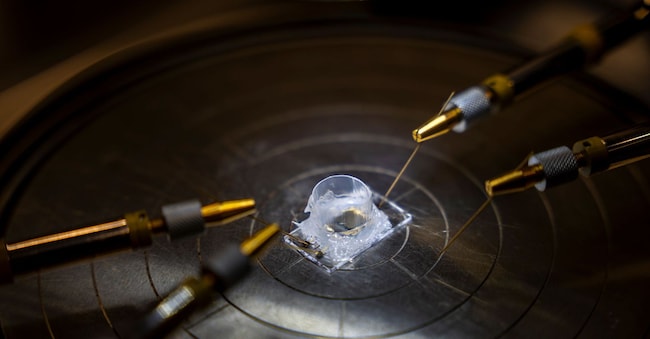
The research was published in the journal ACS Applied Materials & Interfaces and is the brainchild of a team of researchers from the Faculty of Engineering at the University of Bozen/Bolzano. They created an innovative and easy-to-use sensor, based on a carbon nanotube transistor, to identify nanoplastics in water.

2' min read
2' min read
The Faculty of Engineering at the University of Bozen/Bolzano, in collaboration with the Italian Institute of Technology in Genoa, has created innovative, fast and easy-to-use sensors to detect nanoplastics in aquatic environments, starting with the sea. A 'ghostbuster' of invisible plastic in water, which promises to help find all the micro particles, often contaminated by agents such as mercury, that increasingly populate and pollute our waterways, with the aim of then intervening to purify them. An ambitious yet essential goal given that, as the World Economic Forum puts it, 'by 2050 there will be more plastic than fish in the world's seas and oceans'.
The research was published in the journal ACS Applied Materials & Interfaces and is the brainchild of a team of researchers from the Faculty of Engineering at the University of Bolzano, led by Prof. Andrea Gasparella: the young biotechnologist, Giulia Elli, 29, and the professors of the Sensing Technologies Lab, Paolo Lugli and Luisa Petti.
The search
.Nanoplastics pose a serious threat to aquatic ecosystems and the organisms that live in them, due to their ability to interact with other contaminants. Their detection still requires complex and expensive techniques, such as spectroscopy (i.e. the study of an electromagnetic spectrum), which limit the effectiveness of environmental monitoring. This assumption was the starting point for research by the Free University of Bozen/Bolzano and the Italian Institute of Technology's Smart Materials Lab, which proposes an innovative and easy-to-use sensor, based on a field-effect transistor with carbon nanotubes, to identify nanoplastics in water quickly, easily and inexpensively.
Work in progress
.The research is currently being carried out in the laboratory, reproducing the characteristics of sea, river and lake water, to study the behaviour and effectiveness of the sensors in brackish and marine environments. The work is now continuing in France with the Université Paris Cité and is studying the selectivity of the sensors, which in the future will also be able to identify which type of nanoplastics an area of waterway is polluted with. The next step will be to be able to use them outside the laboratory, directly on board boats, to take measurements in nature and sample watercourses or sections of the sea.
Plastics in the sea on the rise
.This new approach could revolutionise the monitoring of nanoplastic pollution, making detection faster and more widespread in aquatic systems. This is an increasingly pressing need, as plastics in the sea are increasing, the assessment of marine nanoplastic pollution is relatively recent, and vast areas of the sea remain poorly explored.

