
Epal, 675 million 'sustainable' pallets
The most reused packaging in the EU is growing and already complies with Ppwr, the Packaging and Waste Regulation

3' min read
3' min read
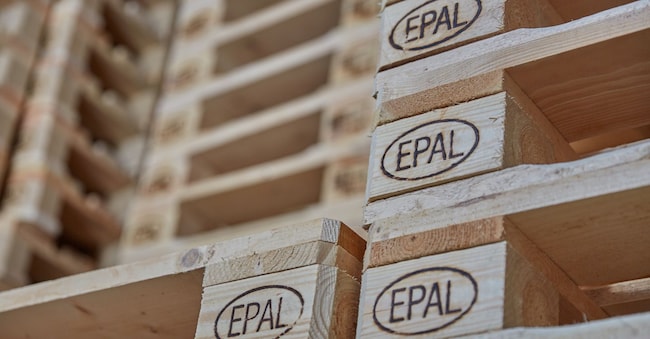
(Il Sole 24 Ore Radiocor) - With a growth in 2024 of 4.3% in the number of pieces repaired and re-introduced into the Italian FMCG logistics circuit, the Epal pallet is in Italy the first packaging already compliant with Ppwr, the new EU Regulation no. 40/2025, on packaging and waste, which came into force last 11 February and will be definitively applied in August next year. It should be remembered that Epal is the international product mark, which distinguishes the most widespread reusable pallet interchange system in Europe. Reuse as a tool for waste prevention and reduction is central to the objectives of the new Regulation, the backbone of the complex system that forms the European Green Deal. With 5.37 million repaired pieces (+4.28% over 2023) and 6.48 million new pieces produced (-3.7%) as the physiological "replacement" of the circulating fleet in 2024, Italian Epal pallets are growing at the beginning of 2025: in January, repaired pallets increased by 2.73% over 2024 (435 thousand pieces), while new ones by 9.47% (554 thousand pieces). The Italian production of Epal pallets is estimated at 7.3% of the European total (in 2021, EU production was 96 million units), when repair volumes are estimated at 17% of the European total (in 2021, estimated at 27 million units in the EU).
Pallet thermometer of economic trends
The wooden pallet has always been a thermometer of economic trends, and the trend at the beginning of the year seems to herald a recovery. "It is difficult to interpret the data of the last period. For example, in 2023 production had grown very little, by 0.39 per cent, while repair by almost 11 per cent. But one of the advantages of this European standard, which sees Italy among the repair leaders in the countries where Epal is used, is precisely its ability to compensate with new or repaired, exchanged or rented, the ups and downs of consumption and exports," warns Riccardo Casadei, coordinator of Conlegno's Technical Committee Epal Italia, which aims to protect and promote this standard that has over 675 million pallets circulating in 35 countries. According to the findings of the Opal Observatory on interchangeable pallets of Liuc-University Cattaneo, the Italian circulating fleet of Epal is 90 million pallets that make no less than 400 million movements a year, more than 1 million a day. The work of the 207 companies specialised in production and repair is controlled and monitored both by the Conlegno Epal Technical Committee and by Conai through the Rilegno Consortium, but also by the PerEpal Monitored Prevention and Reuse System (managed by Conlegno, and recognised by Conai and Rilegno) which verifies the volumes of pallets put back on the market for reuse: for these pallets, there is a 90% discount on the Conai environmental contribution which allowed users to save over 4 million euros last year.
New appointment 9 May in Mogliano Veneto
"The monitoring of new and used pallets following simple sorting or repair allows us to have certain data on reuse," explains Riccardo Casadei, pointing out that "it is an advantage that interests not only those who produce and sell in Italy or Europe, but also those who export. For a nation that exports consumer, durable and intermediate goods worth over $670 billion, the Epal pallet is an environmental passport'. On 13 March in Reggio Emilia, about half of the Italian Epal repairers and industry representatives met to share the latest market data, the upcoming Ppwr requirements, and the process of the Italian law that will regulate the practices and economic value of Epal pallets in interchange by the end of 2025: "This is an important regulation, because it will regulate the quantity and quality of the pallet that the receiver is obliged to return in real time or deferred, as he/she prefers; at last an end will be put to the disputes between industry, logistics and distribution. The objective is to bring the efficiency of the Epal system, which has an index of over 90%, towards 100%,' Casadei emphasises. Meanwhile, a new appointment with Conlegno is scheduled for 9 May in Mogliano Veneto, where - among other topics - the raw material wood and the new EU regulation on packaging and waste will be discussed.


