
Equal opportunities in the armed forces, how NATO rethinks gender equality
Irene Fellin plays an important role in the military organisation and explains difficulties and changes in a world that is still too masculine
by Beda Romano
6' min read
6' min read
At the end of July, three men met in Italy to try to find a solution to the conflict that had been engulfing the Middle East for more than a year. In great secrecy, US CIA director William Burns, Qatari Prime Minister Mohammed bin Abdulrahman Al Thani and Egyptian intelligence director Abbas Kamel met in a private villa in Rome. The aim of the talks was to impose a cease-fire between Israel and Hamas. The attempt failed. Would it have succeeded if there had been at least one woman among the negotiators?
The question is deliberately provocative, but not without meaning. After all, according to common feeling, women should be more inclined to compromise and mediation, perhaps even naturally less prone to violence than men. It is no coincidence that since 2017 the United Nations has launched a long-standing initiative - known by the acronym ELSIE - under the auspices of Canada, which is supposed to enforce gender equality in UN blue helmet units engaged in peacekeeping missions around the world.
The growing presence of women in the military raises new questions. Why are women attracted to the uniform? What can their role be in a society where violence against women seems to be on the rise? Does their presence among the military not risk weakening their ability to mediate in a world already in turmoil? It has been 25 years since Italy introduced women's military service. The anniversary is an opportunity to discuss these issues with Irene Fellin, the Special Representative of the NATO Secretary General for Gender Issues.
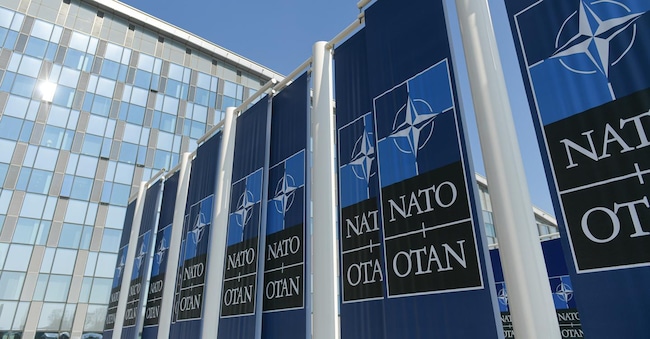
The meeting is set in the new headquarters of the Atlantic Alliance, inaugurated in 2017, on the road from Brussels to the Belgian capital's airport. The building is modern and spacious, much more pleasant than the sad and austere one that the Belgian authorities built in just six months when NATO moved in from Paris in 1967.
Our interlocutor was born in Bolzano in 1976, studied the condition of women in Turkey after obtaining a degree in cultural heritage conservation in Parma and a diploma in museology at the Ecole du Louvre. She is married and has two daughters.


