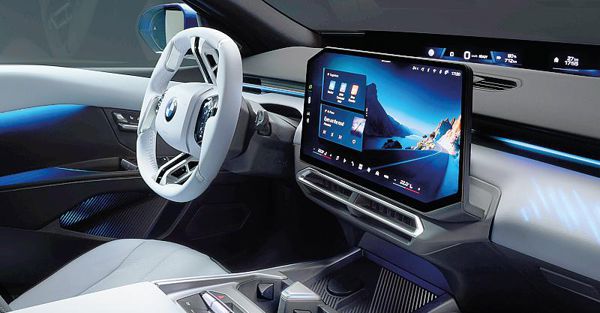
Ergonomics and ease of use challenged by 'all-touch'
Most modern models do not have physical buttons. Using only touch controls on a display, however, proves to be impractical and not very comfortable

The car is not a smartphone on wheels, but a much more complex technological object, among the most sophisticated ever. Despite the storytelling of many car manufacturers, it remains a vehicle that moves and must be driven: autonomous driving, in fact, does not yet exist. Today we are only talking about driver assistance systems, the Adas, some of which are already mandatory and others on the way, but which are not yet advanced enough to really replace the driver.
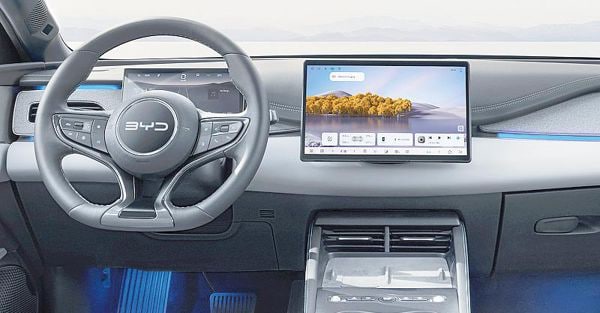
In the latest generation of cars, the real revolution, besides electrification, concerns connectivity, infotainment and the spread of touch screens and digital instrumentation. Most models, with a few exceptions mainly Japanese, adopt increasingly scenic human-machine interfaces: real tablets controlling all the car's functions. However, this approach risks becoming excessive. If innovation is good, the abuse of touch is not: having to navigate through menus and submenus even for simple operations, such as adjusting the air conditioning, can be uncomfortable and unsafe. Of course, manufacturers benefit economically from all-touch: fewer buttons and fewer cables mean multimillion-dollar savings in production
The main problem is distraction: these interfaces force you to take your eyes off the road. This is not a matter of nostalgia for the past or resistance to technology, but a real issue of ergonomics. Chinese cars tend to push a lot on touch controls, while European cars, especially German ones, still retain some physical controls. Behind this choice there is also an industrial logic: concentrating everything on one screen reduces the costs of wiring, buttons and switches, but often at the expense of ease of use. Some models also introduce a third screen for the passenger, further expanding the digital dimension of the cockpit.
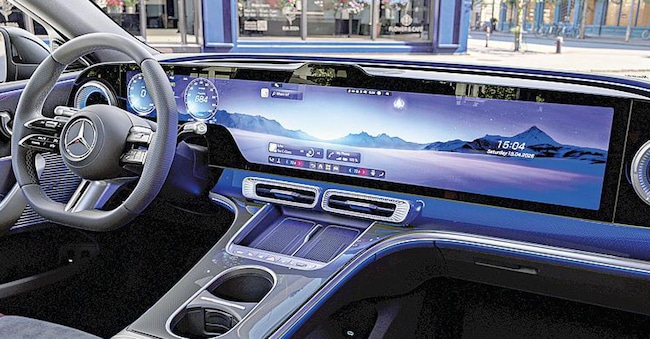
For example, the Mercedes CLA, voted Car of the Year, has this optional feature that is particularly useful for entertaining a passenger. But not only that, other brands such as Audi are talking about a real 'digital stage', with dashboards dominated by glass surfaces and multiple displays. Bmw too is working on advanced interfaces, but trying to adapt the digital to the specificities of the car, which cannot be treated like a smartphone or tablet to be used while stationary.
The issue of ergonomics becomes even more relevant in the world of corporate fleets, where users are often neither enthusiasts nor have the time (or inclination) to learn complex interaction logics. In this scenario, a system based solely on touch screens and layered menus can become an obstacle: simple operations such as adjusting the air conditioning, setting the navigation or managing a call risk requiring too many steps and, above all, distracting attention from driving.