Erwin Wurm, or sculpture at the time of the ephemeral
The Albertina dedicates a large exhibition to the Austrian artist famous for his 'one minute sculptures'.
3' min read
3' min read
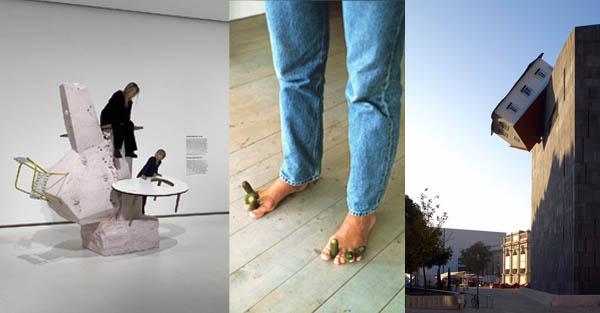
Erwin Wurm owes his international celebrity above all to his 'one minute sculptures', which he created in the 1990s and which he sees as being in line with the speed and interactivity of our time, as they are activated with the participation of the observer and yet only have the duration of each individual interaction. The elements provided - e.g. a pedestal of various shapes and/or a series of objects mostly from our everyday life - are offered together with some instructions for use. The user can follow them and use those elements to become a sculpture himself for the time needed to enjoy the moment or perhaps take a selfie or have someone take a portrait of him.
A broad participation game
.A broadly participatory game that invites you to touch, to try and use, and provides sculpture with the dimension of transformation over time. This was the case at the Venice Biennale in 2017, when Wurm was the protagonist of the Austrian pavilion with precisely a series of those ephemeral sculptures, and it can also be experienced in the retrospective that the Albertina modern is dedicating to him until 23 February for his 70th birthday. In the museum's second location, overlooking Piazza San Carlo, right next to the Musikverein from which the notes of the New Year's Concert resound every January 1st, a selection of about one hundred works retrace the artist's significant stages: first of all the "one minute sculptures", but also other highlights of his production, with which for almost four decades Wurm has been investigating the small and large things that make up our daily lives: jumpers and cars, detergent bottles and houses, shoes and balls, plastic bottles and chairs.
The clothes
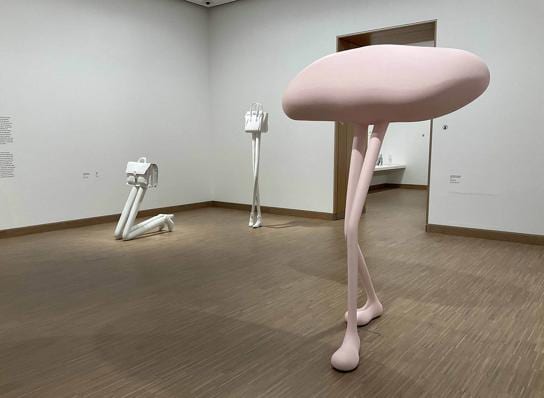
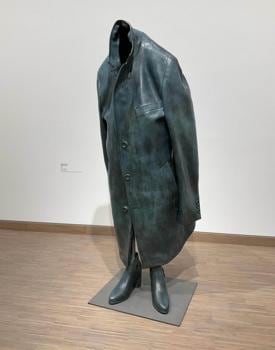
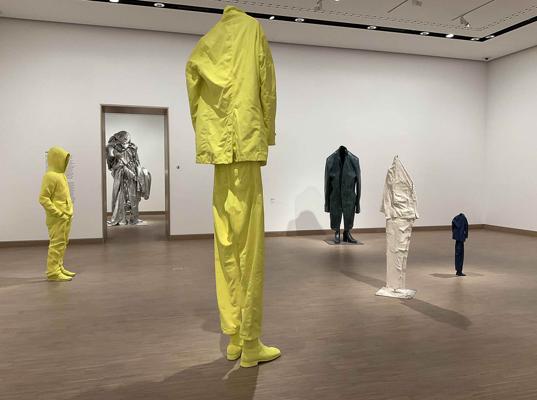
.Quite often for Wurm it is the clothes that make and define the man, so much so that in a game of presence-absence, they become sculptures in which within the shapes of the garments the human limbs disappear or become mere supports in the form of legs or arms for fashionable accessories.
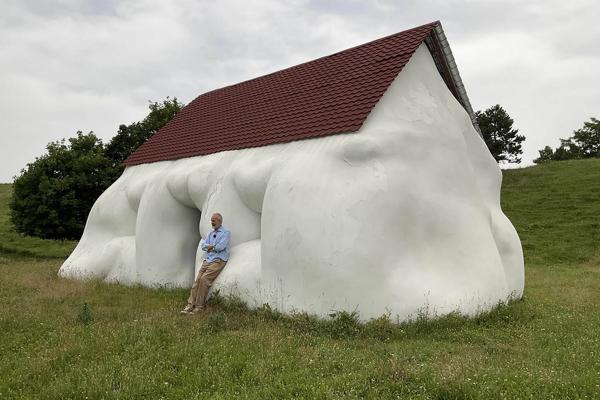
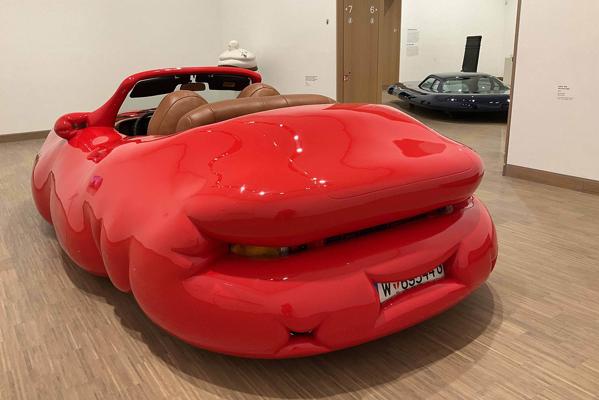
In his eclectic repertoire of sculptures in a wide variety of materials, there are also fat cars and fat houses: life-size objects in which the chubby forms recall the comfortable sphere of cuddling but at the same time awaken disquiet, with their appearance of creatures monstrously fattened by perhaps anthropophagic practices.
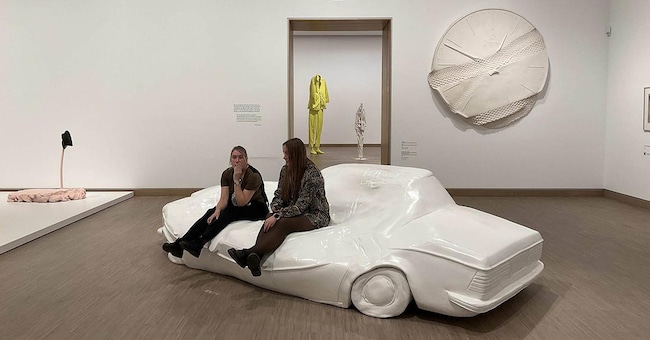
And then on the other hand there are the dissolved or crushed objects: from models of famous people's homes - from Freud to Wittgenstein, from Mies van der Rohe to Karl Marx - to cars that seem to have collapsed under an enormous weight, like the 'German sofa' of 2020.