
Ethiopia: the mega-airport becomes a battleground between the US and China
The project is being built in Abusera, near Bishoftu, some forty kilometres south of Addis Ababa. Work formally began on 10 January and the first phase is expected to be completed by 2030, bringing capacity to 60 million passengers a year. Once fully operational, capacity will reach 110 million passengers, in addition to nearly 4 million tonnes of freight.

It will not just be Africa’s largest airport. With a planned investment of 12.5 billion dollars, four runways and a final capacity of 110 million passengers a year, the future Bishoftu International Airport is also becoming a testing ground for the competition between the United States and China in the Horn of Africa. However, rather than choosing between Washington and Beijing, Ethiopia seems intent on doing what it has done for years: using the rivalry between the major powers to secure capital, infrastructure and technology without committing itself entirely to either of them.
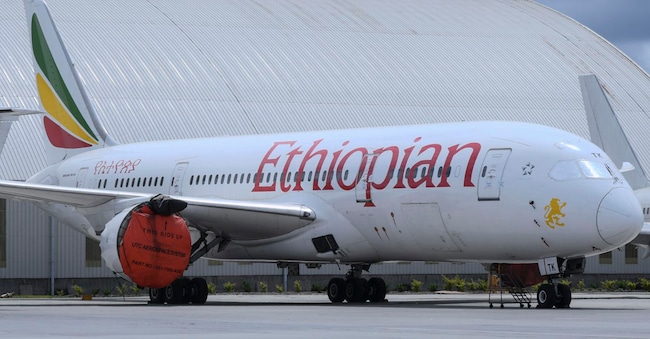
The US is at the forefront. Ethiopian Airlines was founded in 1945 with the assistance of the US-based Trans World Airlines, and its ties with the American aviation industry have continued for decades through Boeing and GE Aerospace. As recently as last April, the Ethiopian airline converted options for a further six Boeing 787-9s into firm orders, bringing the total number of new Dreamliners due for delivery from 2028 to 26.
And it is probably in this area that the United States sees an opportunity to get back in the game. Boeing, GE and other American companies can compete in the most technology-intensive sectors: aircraft, engines, airport systems, security, air traffic management and digital infrastructure. And Washington also has another lever at its disposal: financial leverage.
Ethiopian Airlines is expected to cover between 20 and 30 per cent of the investment directly, whilst the remainder will have to come from international lenders. The African Development Bank has pledged a contribution of $500 million and has taken on the role of coordinator in raising several billion in funding. In the United States, the International Development Finance Corporation, the Export-Import Bank and major private financial institutions have expressed an interest.
However, things are also moving on the Chinese front: as early as the end of 2025, a bank based in China had pledged $500 million, and last March an Ethiopian delegation discussed the project with the Bank of China.

