
Etna: Catania suspends all flights until 11 am on Wednesday
Ash carried by the wind has led to the closure of two sectors of airspace. Comiso has already handled more than a hundred flights but has only six aprons

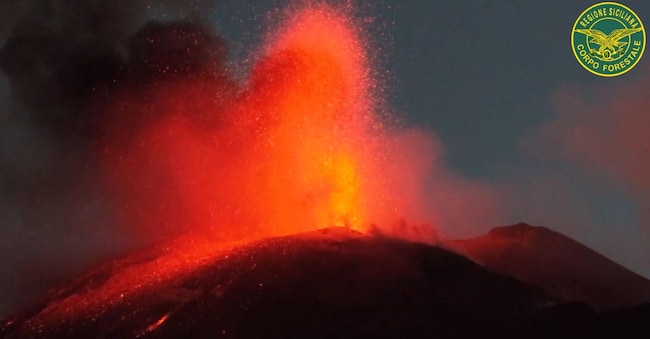
Mount Etna has once again brought Catania airport to a standstill. All flights arriving at and departing from Fontanarossa have been suspended until 11.00 on Wednesday 12 August. SAC, the company that manages the airport, has extended the closure of sector C1 and ordered the closure of sector B3, two areas of airspace affected by volcanic ash. Passengers are asked to check the status of their flight with their airline before travelling to the airport.
Ash determines operational status
The main factors were Mount Etna and, above all, the winds: “Operations at the airport continue to be heavily affected by the unpredictability of the volcanic activity,” said Sac. The direction and intensity of the wind displace the ash cloud and can force changes to the schedule, even several times in the course of a single day. On Tuesday morning, departures were still permitted and the suspension only applied to arrivals; by the afternoon, the airport had been completely closed.
Meanwhile, the volcano continues to be active. At around 11.30, the National Institute of Geophysics and Volcanology observed a new vent in the Valle del Bove, upstream of Monte Simone and at an altitude of approximately 2,090 metres.
A recurring problem
This is nothing new for Fontanarossa Airport: ash from Mount Etna periodically disrupts air traffic. On 7 August, arrivals were suspended on several occasions, but departures were not. The last complete shutdown was on 6 July, when air traffic resumed the following day.
Some of the traffic has now been diverted to other Sicilian airports. SAC says that Comiso has handled more than a hundred flights since the start of the emergency, but the airport closest to Catania has a very real limitation: six aircraft stands. For this reason, explains Alessandro Aricò, the regional councillor for infrastructure, ‘it cannot be considered an alternative solution’ capable of absorbing the traffic from Fontanarossa.

