
ETS, 30 million across two routes: the cost of CO₂ is taking its toll on western Sicily
The study by the Port Authority of the Western Sicilian Sea, carried out by TiM10 under the scientific supervision of Giovanni Satta, analyses the Palermo–Genoa and Palermo–Naples routes

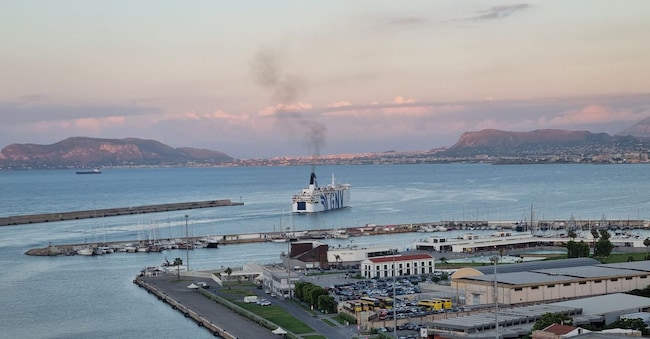
A total of over 30 million euros a year for just two routes. This is the estimated potential cost of the ETS on the Genoa–Palermo and Naples–Palermo routes, assuming that the burden is borne entirely by the shipping companies. This figure does not represent the total cost for the western Sicilian maritime system – which has not yet been calculated – but it already gives an indication of the impact that the price of CO₂ could have on connections between the island and the mainland.
The figures are as follows: almost 20 million euros a year on the Genoa–Palermo route and over 11 million on the Naples–Palermo route. Added to these, hypothetically, would be more than one million on the Porto Empedocle–Lampedusa route should the current exemption for the smaller islands not be renewed. The study points out that this latter route is not currently subject to the ETS scheme.
The ETS (Emissions Trading System) is the European scheme that puts a price on CO₂ emissions: to cover the emissions produced by their ships, shipping companies must purchase allowances. From 2024, the scheme will also apply to maritime transport, thereby transforming part of the environmental cost into a direct cost for shipowners.
The data comes from a study commissioned by the Port System Authority of the Western Sicilian Sea and carried out by TiM10, under the scientific supervision of Giovanni Satta, associate professor of Economics and Business Management at the University of Genoa. The study does not provide an aggregate estimate for freight, cruise ships and services across the entire network, but analyses two actual routes – Genoa–Palermo and Naples–Palermo – and a theoretical case study relating to Porto Empedocle–Lampedusa.
The study sets out sixteen scenarios, combining four levels of ship occupancy with four levels of cost passed on to passengers. If the shipowner absorbs part of the additional cost, the availability of resources falls; if they pass it on to the ticket price, pressure on demand increases. The problem is most evident when ships are less full and during the low season, when fares are lower. Among those most affected are families travelling with cars and those travelling for work, study, healthcare or to return home.


