
Financial markets: EU agreement on centralised supervision
The 27 member states have reached agreement on a text that ‘waters down’ the European Commission’s original proposal
from our correspondent Beda Romano
 Aggiungi Il Sole 24 Ore
ai preferiti su Google
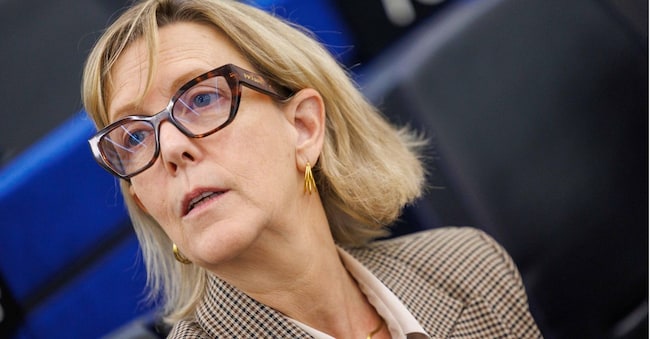
BRUSSELS – After years of doubts and reluctance, and following months of negotiations, the 27 Member States reached a political agreement today, Friday 9 October, on centralised supervision of the financial markets. The agreement between the governments, under the auspices of the Irish Presidency of the European Union, will now be the subject of negotiations with the Parliament with a view to reaching a final compromise. The European Commission has criticised an agreement that waters down its proposal, describing the deal as ‘the wrong signal’ to investors.
“The Council has reached an agreement on the package. The legal text will now be finalised to reflect the agreement reached and will then be formally adopted at a forthcoming Council meeting,” said the Irish Minister for Finance Simon Harris. “I hope that, in time, the decision taken today will be seen as a milestone for the European Union and for our economy.” Market fragmentation is one of the major obstacles to the European Union’s economic recovery.
The compromise reached between the member states has, to some extent, watered down the European Commission’s proposal. In particular, it introduces limits on the transfer of powers to the European authority ESMA, which will be responsible for supervising only the largest markets. According to information circulating on the sidelines of the meeting, Deutsche Börse is, for the time being, excluded from European-level supervision. This is one of the reasons why the Commissioner for Financial Affairs, Maria Luís Albuquerque, has expressed her disappointment.
“There are two crucial areas in which the compromise falls short of the Commission’s proposed ambitions: ‘governance’ and the degree of centralisation of supervision,” explained Ms Albuquerque. In addition to Deutsche Börse, certain major central counterparties – which provide clearing services – and some central securities depositories are also excluded from ESMA’s direct remit. The Commissioner has taken a clear stance in an attempt to influence the forthcoming negotiations with Parliament.
The Italian Minister for the Economy Giancarlo Giorgetti was positive: “I believe that reaching a compromise amongst 27 countries is a great political success (…) In this case, the saying that ‘the best is the enemy of the good’ is very apt, and we see the glass as half full.” According to the politician, “the package strengthens market integration and provides ESMA with broader responsibilities and a governance structure better suited to exercising them”. The new chair of ESMA is the Italian Carlo Comporti.


