
EU poised between rapid response and negotiation: possible reduction of US duties
Von der Leyen speaks of a 'severe blow to the world economy' and prepares countermeasures that could come into force by the beginning of May. But aims for compromise: teleconference between Commissioner Sefcovic and US trade representatives
from our correspondent Beda Romano
 Aggiungi Il Sole 24 Ore
ai preferiti su Google
3' min read
3' min read
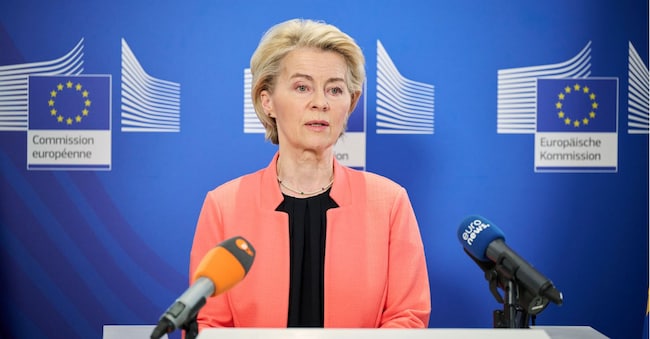
BRUSSELS - The new disruptive American protectionism, which takes the world back to the early decades of the 20th century, caused an extraordinary shock on the financial markets and among European governments yesterday. European Commission President Ursula von der Leyen warned that the EU would respond to the new American choices shortly, probably between late April and early May. At the same time, she reiterated that she is ready to negotiate a compromise with Washington.
"President Donald Trump's announcement of tariffs against everyone, including the European Union, is a blow to the world economy," said Ms von der Leyen who is in Central Asia for a summit with the region's five countries. "The consequences will be terrible for millions of people around the world," she noted, focusing on the poorest countries. Brussels warned that it is preparing "further countermeasures, to protect our interests and businesses".
At the same time, President von der Leyen underlined the European desire to negotiate with Washington in order to avoid the worst: 'We have always been ready to negotiate with the United States, to remove any remaining barriers to transatlantic trade (...) It is not too late to address concerns through negotiations'. Already tomorrow, Friday, Trade Commissioner Maroš Šefčovič will hold a teleconference meeting with his American counterparts.
The stance came after President Donald Trump announced yesterday, Wednesday, symmetrical (or reciprocal) tariffs, i.e. in all areas and countries where American goods are taxed. The generalised rate against European products will be 20 per cent (in addition to the existing most-favoured-nation rate), and will in fact affect goods worth around EUR 290 billion. The decision is in addition to the already announced 25% duties on steel, aluminium and cars.
On the subject of possible negotiations, at a press point in Brussels an EU official did not rule out the possibility of coming to the Americans' aid, in particular by 'reducing some European tariffs'. According to the European Commission, the average European tariff on American goods is 5%. When weighted by product sectors, the rate drops to 1.2%. Conversely, the weighted average rate of US duties imposed on European goods is 1.4%.


