
EU budget: proposal for €134 billion in loans for cohesion and agriculture emerges
The document from the Cypriot Presidency on the launch of negotiations in the European Council includes a proposal to finance a portion of the new national and regional partnership plans—which will encompass funds for the regions and for agriculture—through debt, following the model of the NRRP. Italia’s demands in the negotiations on regional categories, social spending and advance payments

Key points
- bAt the heart of the debate
- bThe issue of advance payments and social spending
- bFunding not linked to costs: a leap into the unknown
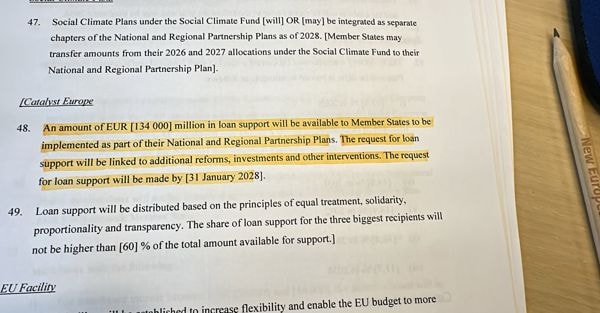
The “PNRR model” is gaining a stronger foothold in European cohesion and agricultural policy. In the so-called negobox, a non-binding negotiating text that serves as the starting point for negotiations between Member States on the next long-term budget for 2028–2034, a paragraph entitled “Catalyst Europe” has appeared in point 48, stating that “€134 billion will be made available to Member States in the form of loans for the implementation of the 27 national and regional plans”, the instruments financed from a single fund that will replace the current regional plans for cohesion and agriculture. The idea, therefore, seems to be to continue down the path of shared debt, pioneered by the “Eurobonds” issued to finance Next Generation EU.
The next point in the document presented yesterday, Thursday 11 June, by the Cypriot Presidency states that the loans will be distributed in accordance with the principles of equal treatment, solidarity, proportionality and transparency; however, the share allocated to the three main beneficiaries (which, according to the European Parliament’s estimates, are likely to be Poland, France and Spain) may not exceed 60% of the available amount. Italia is just behind, in fourth place.
At the heart of the debate
Ahead of the negotiations due to take place in the second half of the year under the Irish Presidency – which President Antonio Costa would like to conclude by the end of 2026 – talks are beginning to take shape, as was also revealed by statements by Prime Minister Giorgia Meloni in Parliament on the eve of the European Council. The debate on the issue is growing in scope and has been the focus of many meetings as part of the Forum Pa which concluded today in Rome.
Sources at the Ministry for European Policies have outlined certain conditions that Italia is seeking to establish in the ongoing negotiations in Brussels. The aim is to ensure that even the more developed regions and those in transition are allocated a share of resources, as has been the case to date, and not just the less developed ones. “This request is consistent with the objective of competitiveness, which is one of the new priorities that the next common budget aims to address,” the source noted. “The size of the initial payments is also under negotiation,” they added.
The issue of advance payments and social spending
The PNRR approach has provided for much more generous advance payments than under the cohesion programmes. According to experts, increasing the percentage of initial payments in cohesion programmes would enable administrations to manage cash flows more easily and allow beneficiaries to limit their reliance on bank guarantees, which effectively divert resources away from projects.


