
EU Commission clarifies: no alarm over US gas dependency, differences with Russia obvious
'Situation not comparable to the tie with Russia'
by Antonio Pollio Salimbeni
 Aggiungi Il Sole 24 Ore
ai preferiti su Google
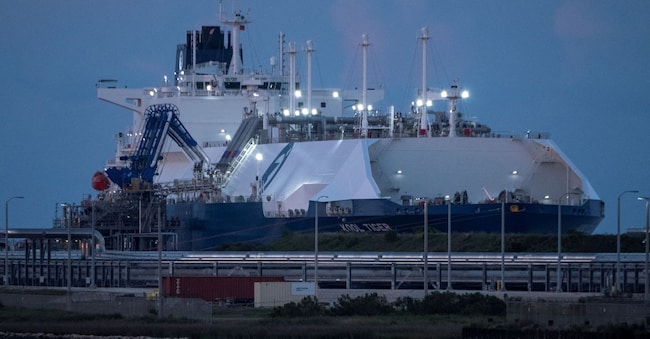
the EU Commission has in fact corrected the message given by two of its members in recent days of alarm over the risk of the EU becoming dependent on US gas imports as part of the decoupling from imports from Russia. The spokeswoman in charge of energy indicated, in fact, while asserting that she did not wish to take a position or comment on statements made by members of the EU college, pressed by journalists, she said that "imports from the US of LNG cannot be compared with dependence on Russia prior to the invasion of Ukraine, that "current data do not indicate the existence of concerns in this regard" and that "importing more energy from the US is part of our strategic move to exit imports from Russia". In recent days, Commission number 2 Teresa Ribera and Commissioner Dan Jorgensen had given an opposite message. The case highlights two aspects: on the one hand, the Commission president does not want to give arguments to the US regarding the agreement (which is political in nature and therefore rather haphazard in its concrete implications) to buy $750 billion worth of energy by 2028; on the other hand, von der Leyen does not want to openly acknowledge that Trump's policy currently no longer makes the US a predictable and reliable partner. Everything indicated at the Commission's press briefing follows directly from the communication choices of the Commission presidency.
Teresa Ribera, first vice-president of the Commission, from Spain, responsible for 'green' transition and competition, had indicated in recent days that the EU was 'significantly increasing our dependence on LNG imported from the United States'. The Danish Energy Commissioner had said that Europe "does not want to replace one dependency with another" (moving from dependency on Russia to dependency on the US). Very clear messages expressed in the context of the growing criticism of the US president's choices culminating in the events in Minneapolis and in the more general context of attacks on the EU (from the Greenland case to the new threats of tariffs).
Other international institutions also hold similar positions. At the Davos conference, the director of the International Energy Agency Fatih Birol indicated that Europe risks 'putting all its eggs in one basket' by replacing one major supplier (Russia) with another major supplier (the US).
The spokeswoman responsible for energy at the European Commission, when asked to clarify what the top management's reactions were to the two commissioners' statements, indicated that currently the EU's dependence on LNG imports ''is much more manageable than dependence on pipeline imports, and this is an aspect of the market that must be taken into account when discussing the transition from one dependence to another''. The LNG that the EU buys from the US, arriving by sea, cannot be considered in the same way as Russian gas that 'travels' via pipelines controlled by Russia, which has practised 'frequently and repeatedly the use of energy supplies as a weapon'. Second argument: imports from the US are part of Europe's strategy to get away from dependence on Russia and 'the LNG market is global and very liquid, flexible, so it offers more options for the EU to diversify supplies'.
Asked to clarify whether the Commission intended to deny its two spokespeople with this argument, the head of the spokespeople's service said that it was not a question of denying but of 'contextualising' their statements.

