
EU Commission, openness to e-fuel and neutrality. With a no to Italy
But the revision of emission standards for new vehicles remains confirmed for 2026

3' min read
3' min read
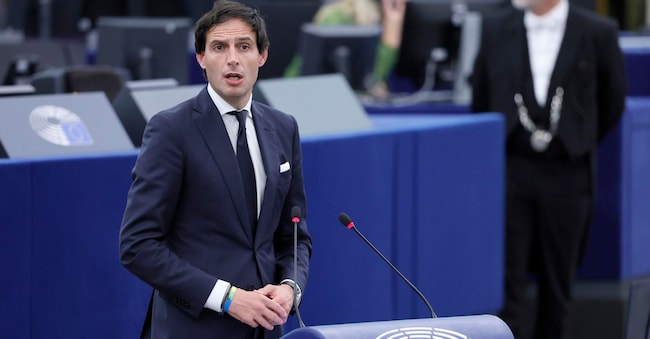
The next European Commission is planning a crucial review of emission standards for new vehicles, planned and confirmed for 2026 (bad news for Italy), with the aim of assessing the role of synthetic (e-fuel) fuels in the transition to climate neutrality. Statements by Wopke Hoekstra, the next Commissioner for Climate Policy, and Teresa Ribera, future Vice-President of the Commission for Climate Policy, highlight the importance of a technology-neutral approach to achieving climate goals by 2035, following the urging (in July) of President Ursula von der Leyen.
As far as technology neutrality is concerned, the next commission's step goes in the direction desired by Italy: the Minister for Enterprise and Made in Italy Adolfo Urso argued for an approach that includes the use of biofuels and other technologies as part of the transition to sustainable mobility. However, Rome would have liked the mid-term review of emission standards, scheduled for 2026, to be brought forward to the first half of 2025. A step deemed necessary to assess progress towards the emission reduction targets and to consider a possible postponement of the so-called ban of 2035, the stop of car production with internal combustion engines.
Hoekstra emphasised in his answers to MEPs ahead of the November hearings that the goal of climate neutrality for cars by 2035 is crucial to provide certainty for investors and manufacturers. "Getting there will require a technology-neutral approach, in which synthetic fuels have an important role to play, through a targeted amendment of the regulation as part of the planned review." The Dutch Commissioner confirmed that the Commission will work to include synthetic fuels as a complementary option to electric mobility, also considering their use in sectors that are difficult to electrify, such as aviation and maritime transport.
The major German car manufacturers have embraced a technology-neutral approach, supporting the inclusion of e-fuels as part of their strategy to reduce emissions. Even Luca de Meo, CEO of Renault and president of Acea (the association of European car manufacturers) stressed the importance of an approach that does not favour one specific technology over others, stating that 'fossil energy is the enemy, not a particular technology'.
The Iberian Teresa Ribera, who will assume the role of vice-president responsible for climate, also emphasised the need to diversify: 'Achieving climate neutrality by 2050 will require a wide range of innovative technologies, and e-fuels will have a role to play. This technology-neutral approach aims to provide practical alternatives to internal combustion engines, the production of which is confirmed to stop in 2035. Ribera emphasised that this decision creates certainty for investors and manufacturers, which is essential to support the industrial transition in Europe.

