Sport

EU countries import EUR 10.8 billion worth of sports goods

From practised sport to the production chain: a growing sector that moves billions and creates new jobs throughout the European Union

by Davide Madeddu (Il Sole 24 Ore), Radoslav Aleksandrov (Mediapool, Bulgaria) and Ana Somavilla (El Confidencial, Spain)

4' min read

Translated by AI
Versione italiana

4' min read

Translated by AI
Versione italiana

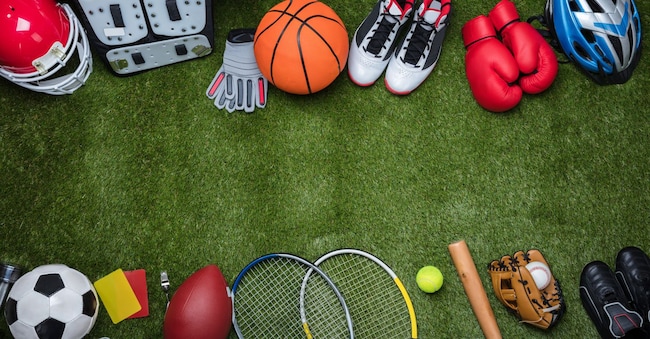
From footwear to canoes, via other boats and equipment for water sports: the sporting activity in EU countries is growing, as are imports of articles for this type of activity. In 2024, products destined for sporting activity, whether amateur, recreational or competitive, arrived from non-EU countries for 10.8 billion euros, or 0.4% of total EU imports. A value well above that of total non-EU exports, which stopped at 7.3 billion euros, or 0.3% of total EU exports. This is the picture described by Eurostat, which analysed the flows involving the EU.

In this picture, the country from which the largest number of sports products were imported was China with a value of 4.5 billion Euro. In second place was Vietnam with 1.9 billion Euro and Indonesia with 0.5 billion Euro. Imports from the USA amounted to 1.6 billion Euro, those from the UK to 1.0 billion Euro and those from Switzerland to 900 million Euro.

Loading...

At the top of the list of imported products are footwear: shoes for sport that also become a fashion item. This is followed by sportswear, from tracksuits to T-shirts, and then continues with other equipment: those for water sports, although there is no shortage of clothing items for cycling or motocross and track motorcycling competitions.

To this part concerning the world of sport is added the number of people who find employment in this field. In 2024, 1.6 million people found employment in the sports sector across the EU, with 37% aged between 15 and 29.

There are also other elements: in tertiary education, in 2024, there were only 2 female students for every 5 male students who studied sport. Furthermore, in 2023, there were more than 5,000 manufacturers generating a turnover of more than EUR 8 billion.

Over the years, prices for sports equipment have been fluctuating, first with a decline and then with growth. From 2014 to 2023 there was a gradual growth with prices accelerating by 6.1%.

Linked to the import and export of sports products, there is also the world of those who practise sport. In Italy, according to ISTAT's reconstruction, more than 21 million 500 thousand people practised sport in their free time in 2024, with a percentage of 37.5%. Of these, 28.7% practise sport continuously and 8.7% occasionally.

The tendency to practise sport has grown over time: in 1995, the proportion of sportsmen and sportswomen among people aged three and over was 26.6 per cent. 'The increase in the practice of sport has almost exclusively concerned the continuous type of sport,' writes ISTAT, 'which has grown by almost 11 percentage points (it was 17.8 per cent in 1995), while occasional and occasional practice has remained fairly stable throughout the period. In 2024, 43.4 per cent of men practised sport, while among women the percentage was 31.8 per cent. Over time, however, the gradual increase in the practice of sport has concerned women more, to the point that the gender gap between practitioners has narrowed from about 17 percentage points in 1995 to 11.6 percentage points in 2024.

Spain: a growing and increasingly diversified sector

In Spain, the sports industry is a major economic driver. According to data from the Ministerio de Cultura y Deporte, in 2022 the sector generated economic activity amounting to EUR 39.1 billion, equivalent to 3.3% of the national GDP. Sports clubs are the main players, with a turnover of EUR 6.2 billion, but the entire ecosystem - from the organisation of events to the production and marketing of sports goods - shows constant growth and strong diversification.

In 2022, 235,400 people were employed in the sector, or 1.2 per cent of the total, an increase of 6.2 per cent compared to 2021.

Spending on sports goods and services accounts for 0.8 per cent of household consumption, but recent trends - from the increase in outdoor activities to the boom in disciplines such as CrossFit and running - have boosted demand for sports clothing and footwear.

According to Euromonitor, retail sales of sportswear reached EUR 5.9 billion in 2023, an increase of 5.6 per cent over the previous year, and are expected to grow by 7.2 per cent by 2025. Overall, the sportswear market in Spain is expected to grow by 22 per cent by 2026, confirming a driving trend for the leisure economy.

Bulgaria: a small market but with manufacturing excellence

Despite boasting a long sporting tradition and international successes, Bulgaria still does not consider the sports industry an economic pillar. According to Eurostat, in 2020 Bulgarian households devoted just 0.2 per cent of their average expenditure to the purchase of sports goods and services, the last share among EU countries.

Between 2021 and 2023, the value of international trade in sporting goods fluctuated between EUR 290 and 375 million, but by 2024 it was back to pre-pandemic levels of EUR 237 million. The majority of exports went to EU countries, worth EUR 183 million.

However, Bulgaria maintains a positive trade balance: in 2024 it exported 237 million euro worth of sports goods and imported 146 million. Bicycles accounted for the largest share of exports (30.4%), followed by gymnastics, swimming and winter sports equipment.

The sector is characterised by numerous SMEs specialising in the production of clothing, footwear and sports equipment. Some local brands are also conquering the international scene: from Hristo Stoichkov's sportswear brand, H8S, to the partnership between a Bulgarian skate and snowboard sock company and Netflix, to E7, the only certified manufacturer of baseball bats in Eastern Europe.

*This article is part of the European collaborative journalism project "Pulse"

Copyright reserved ©
Loading...

Brand connect

Loading...

Newsletter

Notizie e approfondimenti sugli avvenimenti politici, economici e finanziari.

Iscriviti