
EU as a barrier to global disorder: the European doctrine according to Costa
The President of the European Council defends the role of the United Nations and relaunches the international role of the European Union, outlining its contours according to three constituent elements: principles, partnerships and the power to influence power relations
from our correspondent Beda Romano
 Aggiungi Il Sole 24 Ore
ai preferiti su Google
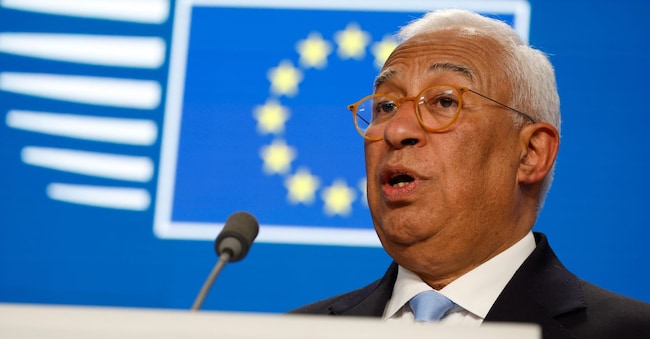
BRUSSELS - Yesterday in Paris, European Council President Antonio Costa launched into a strenuous defence of the United Nations' role in protecting the world order, in one of the most unstable and dangerous contexts. During a conference at Sciences Po, the former Portuguese Prime Minister relaunched the European Union's international role, outlining its contours according to three constituent elements: principles, partnerships and the power to influence the balance of power.
In a speech that aspires to be a foreign policy doctrine, President Costa pointed out that the 'growing disorder' in the world is marked by two major trends. On the one hand, the prevalence of power over law. On the other, the emergence of an increasingly multipolar world. "Increasingly, medium-sized powers aspire to play a major role. Every day, emerging economies grow in size, confidence and power'.
The EU response, according to the former premier, must be based on the three elements just mentioned. First of all, principles: "The European Union," he said, "must continue to support an international order based on rules and founded on the principles enshrined in the United Nations Charter". According to Antonio Costa, 'it is in our fundamental interest to ensure that the world continues to be rule-based and cooperative'.
With the aim of defending international rules, and ultimately its own survival as a legal entity, the European Union must therefore pursue new forms of partnership around the world: "It must join forces with those countries that reject spheres of influence and want power politics to be kept under control by international law," the European executive explained, citing numerous recent agreements.
Finally, to influence the balance of power, the President of the European Council sees two instruments in particular. On the one hand, economic competitiveness; on the other, military autonomy. The first front has to do among other things with the relaunch of the single market, as decided at last Thursday's European summit. The second front concerns defence, and the collective effort to emancipate ourselves from the American security umbrella.


