
EU, 5 countries (including Italia) call for more protection on goods from China
France, Spain, Lithuania and the Netherlands, with the government in Rome, call for the contrast of economic coercion and protectionism
From our correspondent Beda Romano
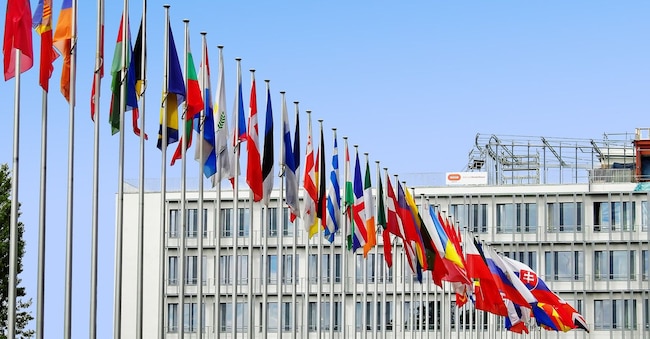
BRUSSELS - Five countries, including France and Italy, have suggested to the European Union to strengthen single market protection tools in a context where forms of economic coercion and trade protectionism are multiplying. The proposal was also signed by Spain, Lithuania and The Netherlands, the latter a traditionally liberal country. The initiative comes at a time when the risk of deindustrialisation of the continent is increasingly being discussed.
"Some of the EU's major trading partners are failing to comply with the multilateral framework, imposing new trade barriers or contributing to systemic and structural industrial overcapacity," reads the seven-page document circulated here in Brussels over the weekend. "This situation has had a direct impact on European industry, which has lost one million jobs between 2019 and 2025."
In this context, the signatory countries explain, 'it is incumbent on the Union to restore a level playing field, both on its own market and in relations with its partners, so that trade can flourish and competition can play its full role within a secure legal framework'. The gaze runs to China, which due to its extraordinary export power is contributing to a process of deindustrialisation of Europe.
The five countries propose a number of measures. The first is to strengthen the European Commission staff to monitor cases of protectionism and unfair competition. The second is to multiply the investigation of sectoral crises. Safeguard measures should be used as a complement to tariffs introduced in response to dumping or subsidies. The paper suggests that safeguard measures should also be used on a temporary basis and for long periods.
"Some third countries resort to increasingly ambiguous and complex practices to circumvent EU tariffs," reads the proposal circulated over the weekend. "Although sometimes constituting a clear case of circumvention, some of these practices cannot be addressed by the European Commission in the light of the existing rules and their current use."


