Europe

EU freight transport: sea prevails, but road share increases

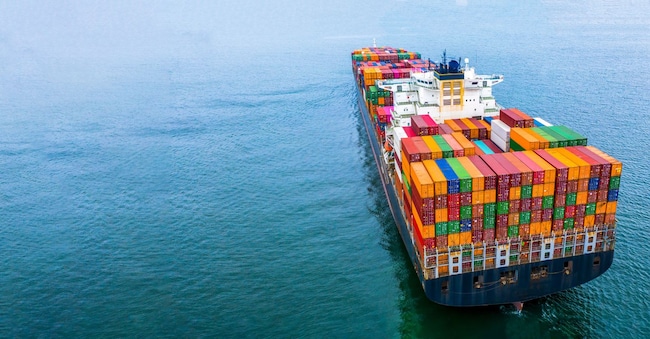
In 2023, more than two thirds of goods in the EU travelled by sea. The share of road transport grows, while rail and air remain marginal

by Davide Madeddu (Il Sole 24 Ore) and Ana Somavilla (El Confidencial, Spain)

6' min read

6' min read

In 2023, approximately 67.4% of the goods transported within the EU territory were transported along waterways. 23.5 per cent was transported along roads while only 5.5 per cent on railways.

The transport of goods by road is growing, but the largest share is still by sea. In 2023, approximately 67.4 per cent of the goods transported within the territory of the EU were transported along waterways. 23.5% were transported along roads while only 5.5% on railways. Within this framework, 'inland waterways' accounted for 1.6 per cent of freight transport and air 0.2 per cent. This is the result of an analysis of the data on the modal split of freight transport published by Eurostat.

Loading...

"Compared to 2013, road transport was the only mode with an increasing share, increasing by 2.8 percentage points over the 10-year period," it reads. "At the same time, the share of maritime transport decreased by 2.0 percentage points, inland waterways by 0.6 percentage points and rail transport by 0.2 points. For 15 of the 22 EU countries with a coastline, the maritime route was the main mode of freight transport and in 10 countries it accounted for more than 70 per cent of freight transport.

"In 2023, maritime freight transport was predominant in all countries with seaports, with the exception of Belgium, Germany, Lithuania, Romania, Poland and Slovenia. The highest shares of maritime freight transport were observed in Portugal, with 98.2 per cent, followed by Cyprus (96.5 per cent), Greece (96.4 per cent) and Ireland (90.8 per cent),' the report states. 'The lowest shares of maritime freight transport were observed in Slovenia (9.8 per cent), Poland (11.3 per cent), Romania (13.5 per cent) and Lithuania (17.6 per cent), making maritime transport only the third or fourth mode of transport in these countries. It should be noted that these shares do not only reflect the maritime transport of goods that occurs in ports, but also the maritime traffic that passes through the port'. Air transport accounted for at least 1% of all freight transport in only seven countries, with Romania (1.6%), Luxembourg (1.5%), Hungary and Lithuania (1.3% each) having the highest shares. "The highest share of road transport was in Luxembourg, with 84.5 % in 2023, followed by the Czech Republic (77.7 %) and Hungary (70.7 %). Road transport was the first or second main mode of transport in all countries,' it goes on to say. 'In 2023, the lowest shares of road freight transport were observed in Portugal (1.5 %), Cyprus (3.4 %), Greece (3.5 %) and Ireland (8.8 %); these were the countries where maritime transport dominated the most'.

The share of each mode of transport is calculated on the basis of tonne-kilometres performed by all five modes of transport.

"A country like Italy, for the way it is positioned in the centre of the Mediterranean and with almost 8,500 kilometres of coastline, deserves more attention from national policy with respect to the potential of sea transport,' comments Arnaldo Boeddu, secretary of Sardinia's Filt Trasporti. 'Historically, Italy's central position in the Mediterranean combined with its peninsular conformation, to which we must add the presence of numerous natural ports, have in the past given our country a fundamental role in connecting different countries. Recalling the trade exchanges that link Europe to Africa and Asia, the trade unionist adds that Italy "has lost its role as a leadership country, leaving the primacy to other countries". "The data and trends speak for themselves," he adds. "If in past years the percentage of goods transported by sea reached almost 80%, over time this percentage has fallen to below 70%. At the same time, if we consider that rail transport has also fallen, we can deduce that road transport is increasing sharply, both in terms of costs and, a non-negligible issue, also from an environmental point of view". In the trade unionist's view, 'a National Transport Plan is needed that takes into account the changed geopolitical conditions as well as the concentrations on three/four shipowning players that hold almost the entirety of goods transport by sea'.

Spain: modern logistics but still unbalanced on rubber

In the European freight transport landscape, Spain represents an emblematic case: a highly developed logistics system in terms of infrastructure, but still strongly dominated by road transport. According to official data from the Ministry of Transport and Sustainable Mobility, in 2023 95.8% of the goods transported nationwide (in tonnes) were moved by road. Maritime transport stopped at 3.1%, while rail and air transport accounted for residual shares, 1.1% and just 0.004% respectively. Compared to 2022, the total volume of goods transported grew by 1.1%, with an increase of 1.2% for road transport and 1.5% for sea transport, while rail and air transport recorded significant decreases (-9.4% and -5.2%).

The dominance of road transport is nothing new for Spain: already in 2022, 95.7 per cent of tonnes were transported by road, compared to just 3.1 per cent by sea and 1.3 per cent by rail. But if one looks at the international dimension, the picture changes. Maritime transport plays a fundamental strategic role for the country's economy: in 2023, Spanish ports handled an impressive 496.3 million tonnes of goods, of which 432 million related to foreign traffic, or 87.1% of the total. To this must be added 48.7 million tonnes of cabotage traffic (internal transport by sea, 9.8%) and just 3.1% linked to secondary port activities such as supplies and fishing. The number of cargo ship operations exceeded 128,000, while gross tonnage (GT) was over 2.2 billion.

The country can count on an extensive and articulated infrastructure network: more than 17,000 km of motorways and motorways, one of the most extensive high-speed rail networks in Europe, and a state-owned port system consisting of 46 ports of general interest, managed by 28 port authorities. Added to this endowment is a strategic geographical position, which makes Spain a natural hub in the traffic between Europe, Africa and America.

However, the main weakness of the Spanish logistics system remains its poor modal integration. According to the Transport and Logistics Observatory (OTLE), 96% of goods travel by road and only 1% by rail, a percentage far removed from European standards, where rail transport accounts on average for 15-18% of land traffic. The main cause is the insufficient interoperability of rail networks, together with the poor efficiency of intermodal platforms: many terminals are still not equipped to handle long trains (750 metres), and several logistics nodes suffer from operational bottlenecks.

In recent years, however, Spanish policy has initiated a trend reversal. The 'Mercancías 30' plan aims to double the share of goods transported by rail by 2030, thanks to investments in logistics hubs, terminal automation, digitisation and the development of 'rail highways'. In parallel, the Strategy for Safe, Sustainable and Connected Mobility envisages targeted interventions on the rail network and the strengthening of the Fund for land accessibility to ports, in order to promote greater interconnection between infrastructure and transport. In support of the maritime sector, the Strategic Framework of the port system approved in 2022 defined 16 strategic lines and 56 management objectives, with the intention of transforming Spanish ports into digitised, sustainable and efficient logistics hubs. Added to this is the Ports 4.0 funding programme, which supports technological innovation in the port sector.

From an environmental perspective, the need to rebalance the system is urgent. According to the International Energy Agency, freight transport is responsible for around 10% of global CO₂ emissions, with road transport accounting for more than 75%. Spain, in line with the European Green Deal, is trying to respond to these challenges with a policy geared towards the decarbonisation of transport, also in response to the growth of post-pandemic e-commerce and the increased environmental sensitivity of consumers.

Meanwhile, the growth of road transport continues. In 2024, there was a further 2.64% increase in transported volumes to 1,644.5 million tonnes, with international exports growing strongly (+9.49%). Forecasts for 2025 indicate further growth of 4%, supported by the good performance of industry and agribusiness.

*This article is part of the European collaborative journalism project "Pulse".

Copyright reserved ©
Loading...

Brand connect

Loading...

Newsletter

Notizie e approfondimenti sugli avvenimenti politici, economici e finanziari.

Iscriviti