
EU Funds: The Strategic Role of Cities and the Lesson for the Post-2027 Budget
When the decision-making chain is too centralised, the quality of local projects matters less and territorial effectiveness tends to be reduced with concrete effects on citizens. Without constraints and key roles for cities, the urban dimension becomes merely optional

At a recent meeting with European mayors, Ursula von der Leyen reminded that 'transition happens where people live: in cities and communities' and promised a new EU agenda for cities. It is a commitment that makes one question inevitable: will the post-2027 budget reinforce this logic or make it optional? Cohesion policy remains the Union's main instrument to reduce territorial disparities and support balanced development. In the last two cycles, the urban dimension has been gradually strengthened: the funds dedicated by the member states increased from EUR 17 billion (2014-2020) to EUR 24.4 billion (2021-2027) of ERDF funds.
The point, however, is not only 'how much' is spent, but 'how' spending is made effective. The ESPON URDICO research offers a comparative reading 'from the cities' point of view' by examining eight case studies (Budapest, Florence, Ghent, Prague, Rotterdam, Strasbourg, Valencia, Warsaw). The lesson that emerges is clear: roles, tools and capacities make the difference. The project outcomes suggest that where stable mandates and functioning multi-level governance exist, interventions tend to be more integrated and coherent with territorial priorities.
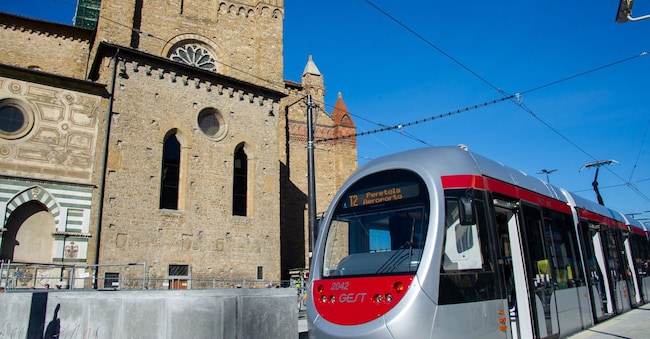
The Italia case is instructive because it shows what happens when a national system creates recognisable channels and clear responsibilities. With the PON Metro and PN Metro Plus and Città Medie Sud experience, the 14 metropolitan cities are considered Intermediate Bodies, thus providing ad hoc funds to implement local initiatives. The total amount has increased from 1.9 billion in 2014-2020 to the current 3 billion for the period 2021-2027. Florence shows how a formalised urban role helps to avoid the 'project-island' effect: building mechanisms, integrating objectives, consolidating administrative capacities and coordination.
Prague and Warsaw, on the other hand, help to clarify a crucial passage for the Italia debate: the urban is not 'in competition' with other territories if it works on functional areas. In fact, current territorial instruments such as Integrated Territorial Investments (ITIs) can be truly strategic when they are anchored to an integrated vision and governance of a vast area, and not mere funding channels. When they work, ITIs stimulate cooperation between neighbouring municipalities and make the urban-rural bridge more concrete, promoting the city's role from 'attractor' pole to motor of territorial integration.
Rotterdam, is a useful reminder against another cliché: cohesion is not only about those 'lagging behind' at the aggregate level. The city is an exceptional case of a Managing Authority for the ERDF thus directing resources towards complex needs in an integrated way. This translates into the possibility to focus territorially targeted interventions on a disadvantaged area combining social objectives, skills and regeneration.

