
Iceland faces a test over the EU, torn between concerns about security and fishing
Voters are being asked to decide whether to reopen accession negotiations. The outcome is uncertain, with the ‘no’ camp holding a slight lead in the latest poll
from our correspondent Beda Romano
 Aggiungi Il Sole 24 Ore
ai preferiti su Google
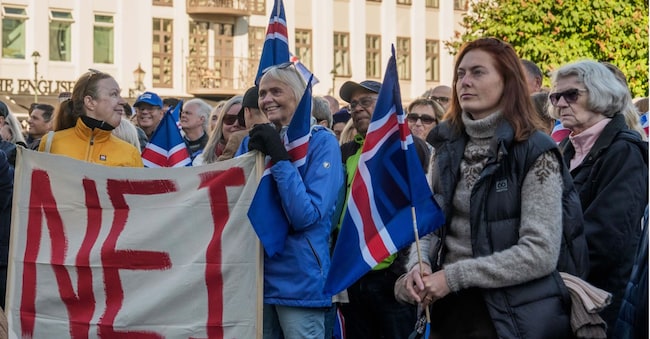
BRUSSELS – The referendum taking place today in Iceland is one whose outcome is highly uncertain. Voters are being asked to decide whether to reopen negotiations on accession to the European Union, which were suspended in 2013. Today, as then, fishing is at the heart of the concerns. Many fear that joining the EU would require sacrifices in a sector that is a mainstay of the Icelandic economy and a symbol of national identity. The vote is also a political test for the European Union, ten years after the United Kingdom’s departure.
According to a poll published yesterday, 51.6 per cent of those surveyed said they were against reopening negotiations with Brussels, whilst 48.4 per cent were in favour. Earlier this week, another opinion poll produced diametrically opposed results: 51.3 per cent of people were in favour of negotiations, whilst 48.7 per cent were against. The more recent of the two polls also shows that the younger age group is significantly more likely than others to vote ‘no’, according to the Icelandic newspaper Morgunblaðið.
Eiríkur Bergmann, a professor at Bifröst University, explained in recent days that the referendum result touches on ‘existential issues’ for a country situated in the middle of the Atlantic Ocean, between Greenland and Norway, almost a thousand kilometres from the European mainland. ‘Iceland is a member of the European Economic Area and the Schengen Area. It is therefore already three-quarters of the way into the European Union. At the same time, it is fiercely proud of its sovereignty,’ added the Icelandic professor. A second referendum would be necessary following any accession negotiations.
In the wake of the financial crisis at the start of the century, Iceland had begun accession negotiations with Brussels. In 2013, the government decided to walk away from the negotiating table for fear of jeopardising its fishing industry, which was the subject of heated discussions with the European Union. On the other hand, according to Statistics Iceland, in 2024 the fisheries sector accounted for around 40 per cent of exports and contributed 8 per cent to gross domestic product.
Even today, many fear that Iceland’s accession to the EU and the consequent acceptance of fishing quotas decided in Brussels would be detrimental to the country. Beyond the economic aspect, many voters’ attitudes towards the fishing industry are rooted in issues of national identity. At the same time, the reason Kristrún Frostadóttir’s (centre-left) government has decided to hold a referendum is that accession is seen as a means of reducing inflation (consumer prices rose by 5.6 per cent year-on-year in August), stabilise the krona, and lower interest rates (the Central Bank’s rate stands at 8.0 per cent).


