
EU-Mercosur: Satisfied with the M5S and League vote, regret from the Pd
First reactions of Italian politicians to the referral of the trade agreement to the EU Court of Justice for a legal opinion

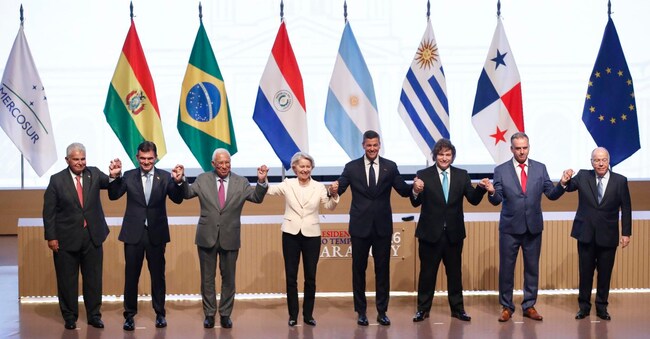
Formally it is a referral of the EU-Mercosur agreement to the EU Court of Justice for a legal opinion. But for many what has just been voted by the EU Parliament is much more. A decision that in fact causes its suspension (the official signing took place just a few days ago on 17 January in Paraguay) for a few months. And a suspension, beyond the opinion of the judges of the EU Court, may give rise to the ranks of opponents to further weaken the trade agreement that still has to be ratified by the Chamber of the European Parliament with a vote that at this point will be postponed until after the opinion of the EU judges.
These are the very first impressions after the Strasbourg Parliament voted a short while ago to approve the request to send the text of the EU-Mercosur trade agreement to the Court of Justice of the European Union for a legal opinion by 334 votes to 324 with 11 abstentions.
"The European Commission," said Commission spokesman Olof Gill, "regrets the decision taken by the European Parliament. In our analysis the issues raised in the Parliament's motion are not justified, because these issues the Commission has already addressed them in great detail. These are not new issues'.
The EU executive also states that it will soon start "a discussion" with national governments and MEPs "before deciding the next steps" on Mercosur. Brussels defends the legal framework of the agreement and the stakes on health and environmental safety, reiterating that the texts were negotiated and signed in full compliance with the Treaties, and stresses that it has worked in close cooperation with Parliament and member states. It is also recalled that national parliaments will be able to express themselves according to their respective processes.
On the other hand, French Foreign Minister Jean-Noel Barrot was very satisfied with the MEPs' vote. France - let us remember - together with Poland and Austria led the front of countries critical of the bilateral agreement. A number of countries, however, insufficient to create a blocking minority against the agreement, which in fact was approved by Coreper in recent days before being officially signed.

