
Orban's EU wants to bridge with Russia
According to press sources, the premier will be in Moscow today. EU Council President Michel: He has no mandate to engage on behalf of the Union
by our correspondent Beda Romano
 Aggiungi Il Sole 24 Ore
ai preferiti su Google
3' min read
3' min read
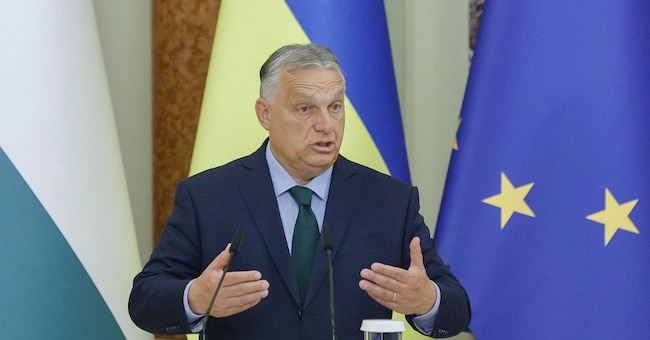
BUDAPEST - "It is not possible to achieve peace while sitting comfortably in an armchair in Brussels". This is how Hungarian Prime Minister Viktor Orban, who took over the rotating presidency of the EU on July 1, begins his post on X. "Although the rotating presidency of the EU has no mandate to negotiate on behalf of the EU, we cannot sit back and wait for the war to miraculously end," Orban adds. 'We will serve as an important instrument to take the first steps towards peace. This is the purpose of our peace mission' in Moscow.
The many facets of the Hungarian government were already revealed to the European press yesterday. The provocative and combative one, but also the moderate and pragmatic one. As of Monday, the Hungary of nationalist Prime Minister Viktor Orbán took over the reins of the European Union for six months. The government spokesman announced that the country wants to 'make its mark'. Last night there were rumours that the prime minister might travel to Moscow, perhaps as early as today, to meet President Vladimir Putin.
The most provocative face is embodied by one of the most trusted collaborators of the sulphurous Prime Minister Orbán. At 55, Zoltán Kovács, who combines blue blazer with washed-out jeans, is the Hungarian government's minister for international communication. 'We know the rules of the rotating EU presidency,' he told a group of Brussels correspondents here in Budapest yesterday, 'Viktor Orbán will use the presidency in a political way (...) Ours is a political agenda.
Last night press sources claimed that the Prime Minister might travel to Moscow to meet President Putin, after he had seen President Volodymyr Zelensky in Kiev on Monday. In the absence of confirmation from his Hungarian counterpart, European Council President Charles Michel reminded X that 'the rotating presidency has no mandate to engage with Russia on behalf of the Union'. Since the Russian invasion of Ukraine, Budapest has refused to arm Kiev, and supports the idea of pursuing peace.
The motto of the Hungarian presidency has turned the lips of many: Make Europe Great Again. The desire to ape former US president Donald Trump's slogan (Make America Great Again) has escaped no one's notice. On a visit to the United States in March, Prime Minister Orbán met with his American colleague, without hiding his sympathy for the businessman who promoted a siege of the Capitol in 2021 after being defeated at the polls.


