
EU rescinds tariffs on US industrial goods and unblocks car knot
The European Commission slashes US tariffs on industrial goods, but concerns grow for the Italian agri-food sector. While the reduction from the beginning of August of US tariffs from 27.5% to 15% for European cars will save more than €500 million

2' min read
2' min read
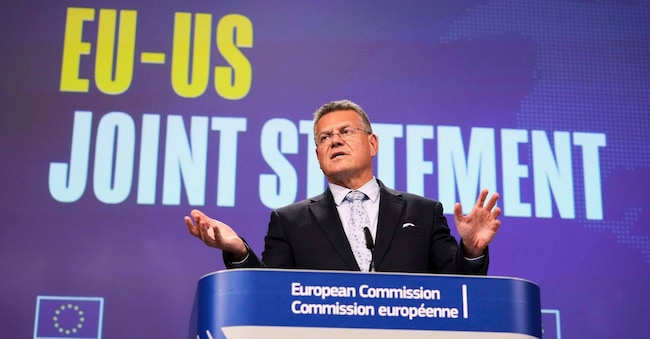
The European Commission formalised the legislative proposal to eliminate tariffs on US industrial goods. The move, based on the commitments of the joint EU-US declaration of a week ago, retroactively triggers from 1 August the 15% ceiling of US tariffs for European cars and car parts. And the reduction from the beginning of August of US tariffs from 27.5 to 15 per cent for European cars will allow carmakers to save more than EUR 500 million in tariffs that would otherwise have been paid for exports in a single month, according to the European Commission.
"The EU-US agreement is a step towards stability and a basis for real cooperation on common challenges, such as steel. Its full implementation is crucial. I particularly welcome the 15% tariff cap on cars and components as of 1 August: a relief and a boost for our industry," wrote EU Trade Commissioner Maros Sefcovic on X.
The two measures
.With the presentation of two follow-up measures to the agreement reached with the US, the European Commission has ensured that US tariffs on EU-manufactured cars and parts will fall retroactively to 15% as of 1 August from the currently applied 27.5%.
The Commission's first proposal envisages the elimination of tariffs on US industrial goods and preferential access to the European market for a number of US fish products and non-sensitive agricultural products, while the second concerns the extension of the tariff-free lobster, now also extended to processed lobster, the EU executive explained in a statement, stressing that it will continue "to engage with the United States to further reduce tariffs, including in the context of negotiations on a future EU-US Agreement on reciprocal, fair and balanced trade".
These are two measures explicitly provided for in the Joint Statement with which the EU and US formalised the tariffs agreement reached in Scotland at the end of July. They "constitute the legislative step necessary to implement the EU tariff reductions provided for in Section 1," the Commission points out, noting that the US in return has committed to raising tariffs on cars and components to 15 per cent in the same month that the EU begins the legislative procedure to remove its tariffs. The reduction "will allow manufacturers to save more than EUR 500 million in tariffs in just one month", the EU executive points out.

