
EU divided on Association Agreement with Israel, possible settler sanctions
Spain's pressure for a suspension clashes with Germany's no. With the arrival of the new Hungarian government, however, an agreement to enact measures against extremist settlers is not excluded
from our correspondent Beda Romano
 Aggiungi Il Sole 24 Ore
ai preferiti su Google
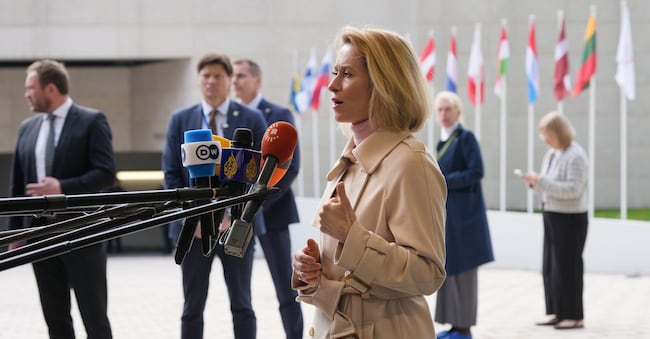
BRUSSELS - Divisions still remain among the Twenty-Seven over the possibility of sanctioning Israel for its acts of war in Gaza and Lebanon. Yesterday's discussion among the foreign ministers in Luxembourg highlighted the growing pressure from some member states, but for now the idea of suspending the Association Agreement in whole or in part is not gaining the necessary support. That said, sanctions against extremist settlers could be decided once the new Hungarian government is in place.
"Some countries have proposed the suspension of the Association Agreement, either in part or in full," explained High Representative Kaja Kallas at a press conference at the end of the ministerial meeting yesterday. Others have opposed it (...) Suspending at least part of the arrangement requires a qualified majority of countries in favour. It will take a change of attitude of some countries to possibly achieve this goal'.
Two antithetical positions have emerged. The Spanish one through the mouth of Foreign Minister José Manuel Albares who, as announced in recent days, called for an end to the Association Agreement with Israel: "Europe's credibility is at risk," he explained. The other, contrary position came from Germany. Any suspension of the agreement with the Jewish state would be 'inappropriate', said Foreign Minister Johann Wadephul.
For the time being, the tout court suspension of the Association Agreement does not seem possible, also because it would require unanimity of the member countries. There remains the possibility of suspending the trade part of the agreement, for which a qualified majority of the member countries would be sufficient. According to EU statistics, the European Union is currently Israel's largest trading partner, with an interchange of goods worth EUR 43 billion in 2024.
A diplomat explained last night: 'Italia's position will be crucial because it could move the votes in the direction of a partial suspension'. Yesterday, Italian diplomacy was cautious, even though Rome decided to suspend the automatic renewal of the bilateral defence agreement. Foreign Minister Antonio Tajani explained: 'There are neither numerical nor political conditions' for a suspension of the agreement.


